Live casino game shows on UK-licensed sites, 2026: what the wheel is, who runs it, and what it really takes from the player
 Available in GB
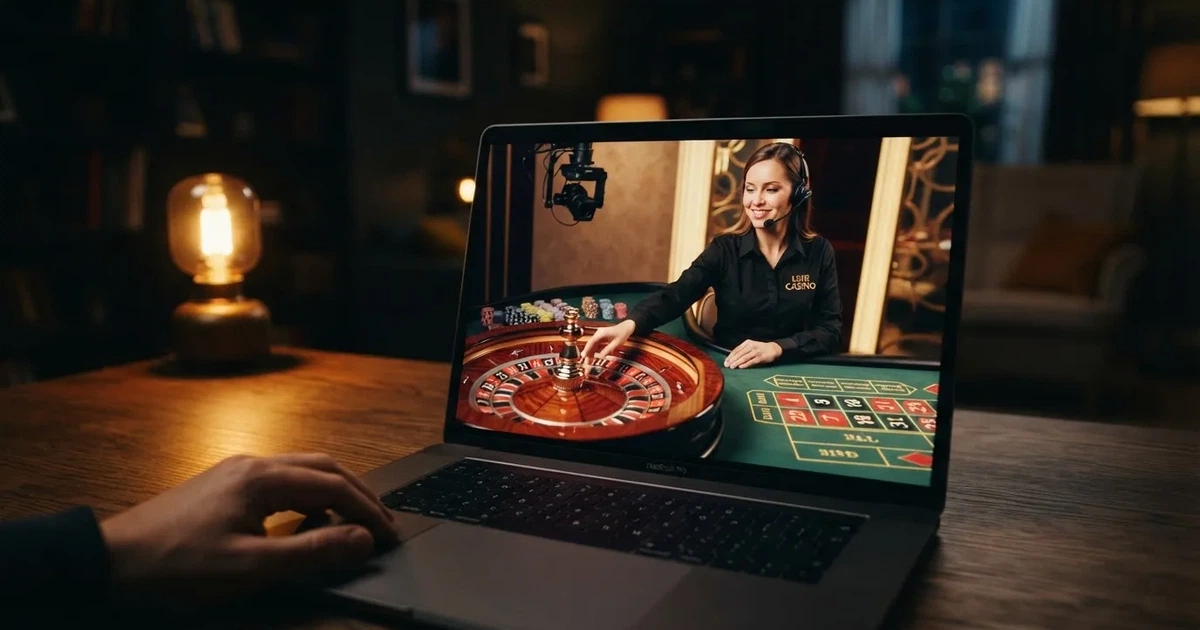
A live casino game show is a real-money casino product streamed from a studio, fronted by a presenter, played on a wheel or a card device. It is the part of a UK-licensed casino lobby that looks most like television and pays out most like a slot. This page is about the product itself — what is on the wheel, what the house takes, and which UK Gambling Commission-licensed sites actually carry it — written for the player who wants to know what sits behind the thumbnail before staking on it.

Current as of 23 September 2026 against the Gambling Commission’s public register of gambling businesses (CSV download).
Table of Contents
- The UK live casino landscape at a glance
- The mechanics a player is actually paying for
- What the safer-gambling framework around the wheel looks like
- The titles a UK-licensed lobby carries, and what each one asks of the player
- What the wagering cap actually costs the player
- Where the UK-licensed operators named on the page sit
- What is not on the page, and why
- The questions readers actually ask
- Frequently Asked Questions
The UK live casino landscape at a glance
| Brand | Licence Holder | Licence |
|---|---|---|
| Virgin Games | Gamesys Operations Limited | 038905-R-319430-022 |
| Jackpotjoy | Gamesys Operations Limited | 038905-R-319430-022 |
The 139 active remote casino operating licences on the Gambling Commission’s register at the snapshot taken for this page underpin around 1,065 active website entries and a further 361 white-label domains. A white-label site runs under another operator’s licence — Virgin Games and Jackpotjoy, for example, both sit on Gamesys Operations Limited’s licence, so what looks like two competing brands is one licence, one compliance file, one safer-gambling regime.
The number a player needs is the licence account. The register’s licence number is laid out as six digits, an “R” for remote, a second run of digits, and a suffix — 038905-R-319430-022 is Gamesys Operations Limited. The leading six digits repeat the account number; the “R” confirms the licence covers online play. The same shape recurs on every brand named on the page below.
What “landscape” really means at this depth is the constraint the licence sets. A remote operating licence under the Gambling Act 2005 obliges the holder to verify age and identity before the first deposit, to enrol every customer in GAMSTOP, to publish a reality-check prompt while the product is running, and to refuse credit-card funding. Those are not preferences an operator can opt out of. The format itself — the wheel, the studio, the presenter — is where the differentiation lives; everything around it is the same regulated shell.
Where the game show category came from
The category is young. Evolution AB, the Stockholm-based live casino studio founded in 2006, launched Dream Catcher in 2017 and frames it as the title that created the live game show segment. The product was a vertically mounted money wheel with 54 segments, of which 52 carried numbers (1, 2, 5, 10, 20, 40) and two carried multipliers (2x and 7x). Two years later the catalogue expanded with MONOPOLY Live and Deal or No Deal Live; Crazy Time followed in 2020; Funky Time, the 1970s disco-themed wheel, arrived in 2023. Evolution’s 2020 acquisitions of NetEnt and Red Tiger brought slot content into the same group, which is why so many UK lobbies now carry Evolution, NetEnt and Red Tiger titles from one supplier relationship.

Crash-style multiplayer games are a related but separate category. Spribe, founded in 2018, released Aviator in 2019; the format is a multiplier that climbs from 1.00x until it crashes, and the player must cash out before the crash. Spribe has reported more than 42 million users and around 350,000 bets a minute across more than 5,000 operators. Aviator is not a wheel and is not fronted by a presenter in a studio, so it sits beside the game show category rather than inside it.
The mechanics a player is actually paying for
The headline of a live game show is a wheel, a presenter, and a multiplier. The substance is closer to a slot: the wheel is a random number generator dressed up in chrome. There is no skill to deploy on Dream Catcher’s spin, no decision that moves the long-run return. The 2x and 7x segments change the size of a single payout, not the shape of the mathematics. The same applies to MONOPOLY Live and Crazy Time: the bonus games look interactive, but the entry to them is a wager on a slot-style RNG, and the bonus round itself is a presentation over a fixed probability.
The reason this matters is that the “live” label changes nothing about the house edge. The studio, the presenter, the cameras — these are production costs the operator pays for. The math underneath is the math of any other remote casino product. The Gambling Commission’s revised remote gambling and software technical standards, in force from 17 January 2025, treated this as explicit: rules that already applied to online slots — autoplay bans, a minimum spin cadence, the ban on win-celebration effects for any return at or below stake — now apply to other online gaming products including live game shows. The same regime also requires the product to show net spend and time in play to the player.
A live game show, in regulatory terms, is an online gaming product that happens to be filmed. The licence treats it that way; the player should treat it that way.
What a “real” bonus does to a game show
Bonuses on UK-licensed sites since 19 December 2025 carry a hard cap: wagering requirements are limited to 10x the bonus amount, and mixed-product offers (stake on sport, receive casino spins, for instance) are banned. The cap applies to the requirement, not to the size of the bonus itself. A £100 bonus with a 10x wagering requirement means £1,000 of qualifying play before withdrawal; a £10 bonus with the same 10x requirement means £100. The smaller bonus is cheaper to clear in absolute terms, even at the same turnover multiple.
A live game show stake typically contributes fully to wagering, but it contributes at a slow pace. A Crazy Time spin at £1 with a 5-second interval clears £720 of wagering per hour — that is the cadence of a slot, and slots are themselves capped at no faster than 2.5 seconds per spin. On a live game show the cadence is set by the wheel, not by the software, and a single round takes longer than a slot spin because the presenter has to spin the wheel, the camera has to follow it, and the software has to settle the round before the next bet window opens.
The arithmetic of the £100 bonus, worked honestly, is the page’s own estimate of how long the player is tied to the product. It is not a prediction of a payout.
What the safer-gambling framework around the wheel looks like
The framework around a live game show on a UK-licensed site is the framework around any Commission-licensed product. The headline is GAMSTOP, the national self-exclusion scheme, mandatory for every online licence since 31 March 2020 — periods of six months, one year or five years, no early cancellation. The secondary headlines are the financial vulnerability checks at £150 in net deposits over a rolling 30 days (from 28 February 2025) and the requirement that any operator must prompt a player to set a financial limit before the first deposit (from 31 October 2025).
Three pieces of the framework directly affect how a live game show plays. The first is the autoplay ban: a player must press a button for each spin or round, by hand, every time. The second is the no-faster-than-2.5-seconds rule, which sets a floor on the pace of a slot — a live game show sits above this floor naturally, but the rule exists for slots specifically. The third is the ban on win-celebration effects for returns that do not exceed the stake, which is why a wheel landing on a number that pays 1:1 does not get the audio treatment a slot win gets. The studio design lives inside the technical standards, even when it does not look like it does.
Reverse withdrawals — the option to put money back into play that the player has already asked to withdraw — were banned from 31 October 2021, which closes a route where a player could undo a sensible decision mid-session. Auto-play is banned outright. The reality-check prompt, which displays net spend and time in play during a session, is part of the same architecture.
The age-tiered stake limit and why it does not catch a wheel
The headline online-slot stake limit — £5 for players aged 25 and over from 9 April 2025, £2 for 18-24s from 21 May 2025 — does not apply to a live game show. The limit sits on the slot game cycle specifically; the UK government’s framing for it was the higher average problem-gambling score of 18-24 year olds and the ongoing neurological development of that age group. A live game show is not, on the regulator’s reading, a slot: the stake a player can place on a wheel spin is set by the operator’s table limits, not by the £5/£2 ceiling.
The right reading is that the limit catches the product the data covers, and the limit’s absence on a live game show is not an oversight. The same data the limit rests on applies to the player, not to the format.
The titles a UK-licensed lobby carries, and what each one asks of the player
The titles below are the ones a UK player is most likely to meet on a Commission-licensed lobby, in the order they tend to appear in the supplier’s marketing. They are not ranked by payout; the figures the research base carries for individual titles are too thin to rank, and an RTP or volatility class for a wheel-format live game show is rarely published by the studio at the granularity an article can transcribe honestly.
Dream Catcher (Evolution, 2017)
The wheel is 54 segments, 52 numbered across 1, 2, 5, 10, 20 and 40, plus a 2x and a 7x multiplier. A bet on a number pays that number if the wheel lands on it; a bet that lands on a multiplier segment doubles or septuples the payout of the next number spin. The format is the template every later wheel-based show inherits, and it is the lowest-friction entry into the category: a single bet type, one outcome, no bonus round. The published RTP for Dream Catcher sits in the upper-90s range on numbered bets and lower on the multiplier segments, which is why the multiplier is sold as the attraction — it is also the bet with the longest losing streak in expectation.
MONOPOLY Live (Evolution, 2019)
A money wheel with the same numbered layout as Dream Catcher, plus a “ROLL” segment that triggers a 3D MONOPOLY bonus board. The bonus board uses a second RNG to land on properties, and the payouts escalate as the multiplier builds. The product launched in 2019 and is the first Evolution wheel to graft a separate game onto the spin outcome.
Deal or No Deal Live (Evolution, 2019)
A presenter-driven adaptation of the television format: a multi-tier prize board is the underlying engine, the presenter opens qualifying briefcases, and a “Banker” offer at each round lets the player trade a locked-in prize for a guaranteed amount. Released in 2019 alongside MONOPOLY Live.
Crazy Time (Evolution, 2020)
A money wheel with the bonus density turned up: four bonus games (Coin Flip, Cash Hunt, Pachinko, Crazy Time) are reachable from named wheel segments, and the studio set is the most produced in the catalogue. Launched in 2020. The volatility is the highest in the wheel family because the bonus rounds carry the payouts and the straight number bets are the cheapest way to stay in the round.
Funky Time (Evolution, 2023)
The 1970s disco-themed wheel launched in 2023. The structure follows Crazy Time’s: a money wheel with named bonus segments, each bonus a separate RNG-driven game.
Aviator (Spribe, 2019)
The crash-style multiplayer game released by Spribe in 2019. A multiplier climbs from 1.00x and the round randomly crashes; the player must cash out before the crash. Aviator is not a wheel and has no presenter — it sits next to the game show category because the studio treats it as adjacent, not because it is one. Spribe’s reported footprint is more than 42 million users and around 350,000 bets per minute across 5,000-plus operators.
Baccarat (Punto Banco) as the contrast case
Punto Banco developed in Havana in the 1940s and is the baccarat variant now played in most UK lobbies. The casino banks the game at all times and both hands are dealt out to fixed drawing rules, so the player makes no strategic decision. Chemin de Fer, the variant popular in France, lets players make choices and includes an element of skill but is not the variant on a UK live casino floor. Baccarat is the cleanest counter-example to the live game show: the format is older, the betting surface is narrower, the volatility is lower, and there is no presenter-led show around the outcome.
What the wagering cap actually costs the player
The 10x wagering cap that took effect on 19 December 2025 fixes a single variable the player used to have to read for. Before the cap, a bonus could carry a 35x or 50x requirement and the player had to clear all of it. After the cap, the requirement sits between the bonus amount and ten times that figure, and the player’s calculation shrinks to: bonus amount, stake size, pace of play.
A worked estimate for a £100 bonus at a 10x requirement, wagered at £1 per spin with a 5-second interval:
- Required turnover: £100 × 10 = £1,000.
- Spins to clear: £1,000 ÷ £1 = 1,000 spins.
- Time at a 5-second interval: 1,000 × 5 seconds = 5,000 seconds, or roughly 1 hour and 23 minutes.
The same calculation at 50p stakes runs to twice as many spins and around 2 hours 46 minutes. At £2 stakes it halves to about 42 minutes. The cadence is the lever; the bonus amount is the cap on the absolute cost.
Two qualifiers. First, the 10x cap is the ceiling, not the floor — a bonus may carry a smaller requirement, and the same arithmetic then produces a smaller turnover. Second, this is a statistical estimate. It assumes every spin is settled, the wagering contribution is 100%, no round is interrupted by a presenter pause or a table closure, and the player does not change stake size mid-clear. The estimate is a band, not a single figure, and the band widens as the stake falls.
A live game show on a UK-licensed site typically clears wagering at the same contribution rate as a slot — full credit per £1 wagered. The pace is the variable that is different. A live wheel round takes longer than a slot spin, so the same turnover takes more minutes per pound on a live game show than on a slot.
Where the UK-licensed operators named on the page sit
The ten brands below are taken from the Gambling Commission’s public register snapshot. The table is a structural reading of who holds the licence, who runs the domain, and whether the register sees the domain as active or white-label. The table does not rank the brands, and it does not say which one carries which live game show — the register does not carry that detail, and an answer that requires the lobby to be opened is not an answer the page can give.
Licence and domain table
| Brand | Licence holder | GB remote casino licence | Domain status |
|---|---|---|---|
| Virgin Games | Gamesys Operations Limited (account 38905) | 038905-R-319430-022 | White-label domain |
| Betfred | Petfre (Gibraltar) Limited (account 39544) | 039544-R-319290-010 | Active domain |
| Betfair | PPB Games Limited (account 39411) | 039411-R-319335-010 | Active domain |
| Sky Vegas | Bonne Terre Gaming Limited (account 65519) | 065519-R-339675-002 | Active domain |
| Gala Bingo | LC International Limited (account 54743) | 054743-R-330863-014 | Active domain |
| 32Red | Platinum Gaming Limited (account 45322) | 045322-R-324275-019 | Active domain |
| Casumo | Recro Limited (account 61549) | 061549-R-336718-002 | Active domain |
| Midnite | Dribble Media Limited (account 42647) | 042647-R-321653-022 | Active domain |
| PokerStars | Stars Interactive Limited (account 39108) | 039108-R-319334-026 | Active domain |
| Jackpotjoy | Gamesys Operations Limited (account 38905) | 038905-R-319430-022 | Active domain |
Virgin Games and Jackpotjoy share the Gamesys Operations Limited licence. The two brands are separate marketing surfaces on one licence, one compliance file and one GAMSTOP registration. Reading them as competitors is reading the wrong layer.
Virgin Games
Virgin Games sits on Gamesys Operations Limited’s account at the Commission, with Virgin Games registered as a white-label domain — the licence is the operator’s, the brand is the front. The structure means a player opening an account here is opening an account on a long-standing UK licence rather than a standalone operator. What the page cannot say is which Evolution or Spribe live game shows the lobby carries today; the supplier list is a commercial decision and the research base does not pin a specific catalogue to this brand.
The white-label status is the practical reading. Two brands run from one account, and the safer-gambling controls, the GAMSTOP enrolment, the identity verification on first deposit — these are administered once and apply to both.
Betfred
Betfred’s licence is held by Petfre (Gibraltar) Limited at account 39544, with Betfred registered as an active domain. Betfred’s broader identity is a UK high-street bookmaker; the online casino is one product on the same licence. The relevant point for a live game show player is that the licence has been continuously held by the same group, and the domain is active on the register rather than carried as a white-label.
Betfair
PPB Games Limited holds the Betfair licence at account 39411, with Betfair active on the register. Betfair’s identity is a betting exchange first and a casino second, but the casino side of the operation runs on the same remote operating licence and is bound by the same Commission technical standards as any other UK-licensed casino. A live game show in the Betfair lobby is a Commission-regulated product; the exchange history is irrelevant to the wheel.
Sky Vegas
Bonne Terre Gaming Limited holds the licence at account 65519, with Sky Vegas an active domain. Sky Vegas is one of the smaller UK-licensed casino brands by licence count, but the licence is current and the domain is active. The Sky broadcast tie-in is the marketing layer; the gambling licence is the regulated layer.
Gala Bingo
LC International Limited holds the licence at account 54743, with Gala Bingo an active domain. LC International is also the parent of other UK-licensed brands in the wider market; on the register, what matters is that this account holds the licence and Gala Bingo is the live domain. The “bingo” in the name is the brand’s history; the licence covers the full remote casino scope.
32Red
Platinum Gaming Limited holds the licence at account 45322, with 32red an active domain. 32Red is one of the longer-standing UK-licensed casino brands, and the licence has been held continuously. The live game show question for any UK brand is the same: which titles the lobby actually streams is a commercial decision the register does not record.
Casumo
Recro Limited holds the licence at account 61549, with Casumo active. Casumo’s market entry sits inside the post-2014 licensing environment, after the Gambling (Licensing and Advertising) Act required any operator taking customers in Great Britain to hold a Commission licence. The licence is current and the domain is active; the structural reading is no different from the others.
Midnite
Dribble Media Limited holds the licence at account 42647, with Midnite active. Midnite is among the more recent UK-licensed entrants, and the licence sits on a single dedicated account. The active status on the register means the domain is currently trading, not that the licence is in any grace period.
PokerStars
Stars Interactive Limited holds the licence at account 39108, with PokerStars an active domain. The poker heritage is the brand’s centre of gravity; the casino side of the operation runs on the same remote operating licence. A live game show on the Stars Interactive licence is the same regulated product as a live game show on any other UK-licensed site, with the same technical standards in force from 17 January 2025.
Jackpotjoy
Jackpotjoy sits on the same Gamesys Operations Limited licence as Virgin Games, with Jackpotjoy an active domain. The reading is the same as Virgin Games: same account, same compliance file, same safer-gambling regime, different brand surface.
What is not on the page, and why
Several details a reader might expect are absent on purpose. No bonus, promo or voucher code is printed — the page is about what an offer is worth, not how to claim one. No recommendation is made about which brand to play with — the comparison is structural, and the table is a reading of the register rather than a ranking. No live RTP or volatility figure is attributed to a brand-specific title — research carries the figures for a handful of Evolution titles, not for the specific operator’s lobby. Where a column would be empty or repeat a single value, the column is dropped.
The licence column on the table is dense because that is what the register carries. The “live game shows in the lobby” column would be a guess.
The questions readers actually ask
Questions often asked about the live game show format include how the studio produces the wheel, whether a bonus carries over to the game, and how the studio manages the pace of a round.
Frequently Asked Questions
What is a live casino game show, and how does it differ from a table game?
A live casino game show is a real-money casino product streamed from a studio, fronted by a presenter, played on a wheel or card device. The format blends broadcast production with a betting surface that, underneath the cameras, behaves like a slot. A table game — baccarat, blackjack, roulette — uses a felt and a croupier and has a smaller betting surface with narrower volatility; a game show uses a presenter, a wheel, and bonus rounds designed to feel like a television format.
Are live casino game shows streamed from a real studio?
Yes. Evolution’s live game show catalogue is produced from studios the operator runs in Europe and North America; Spribe’s Aviator is server-rendered without a presenter. The studio is the production layer; the outcome is set by an RNG the regulator has approved.
Do UK-licensed sites publish odds or payout structures for game shows?
The studio publishes a return-to-player figure on each title page, in the same way a slot publishes its RTP. The figure is for the named bet type, not for a session. The “odds” framing in marketing usually refers to a single spin’s payout, not to a long-run return.
Can a bonus be used to play a live casino game show?
On most UK-licensed sites, yes. Live game shows typically contribute 100% to wagering; the constraint is the wagering cap and the pace. A £100 bonus at 10x, wagered at £1 per spin on a 5-second live wheel, clears in roughly 1 hour 23 minutes.
Is a live casino game show hosted by a real presenter?
For Evolution’s wheel and card-format titles, yes — a presenter hosts the round in a studio. Aviator, as a crash-style multiplayer game, has no presenter. The distinction matters because the presenter’s role on a wheel show is to manage the round and stage the bonus, not to alter the underlying probabilities.
Are live casino game shows covered by the same licence as slots on the same site?
Yes. A single remote casino operating licence covers every online gaming product the operator offers. The technical standards that apply to slots — autoplay ban, minimum spin cadence, the no-win-celebration rule for returns at or below stake, the net-spend and time-in-play display — apply to live game shows as well, from the 17 January 2025 update.
Created by the ”cryptocasinoguideuk” editorial team.