Paying by phone credit at a UK mobile casino in 2026 — what the player pays for the convenience
 Available in GB
Depositing by phone credit at a UK mobile casino looks like the easiest way to fund a session: no card to hand, no banking app to open, a deposit charged to the monthly phone bill or deducted from pay-as-you-go credit. The Gambling Commission’s public register listed 139 businesses holding an active remote casino operating licence on 18 September 2026, against 1,065 active and 361 white-label domain entries — and the page below was built by working through that register, not through marketing. Every brand named below is a Commission licensee, and the deposit limits, the wagering cap and the safer-gambling obligations that follow from holding that licence apply to every one of them. The cost a reader pays for using phone credit sits in three places: the per-transaction ceiling the method itself imposes, the 10x wagering cap on any bonus issued since 19 December 2025, and the slow first withdrawal that ID and source-of-funds checks produce — and each is taken up in its own section below.
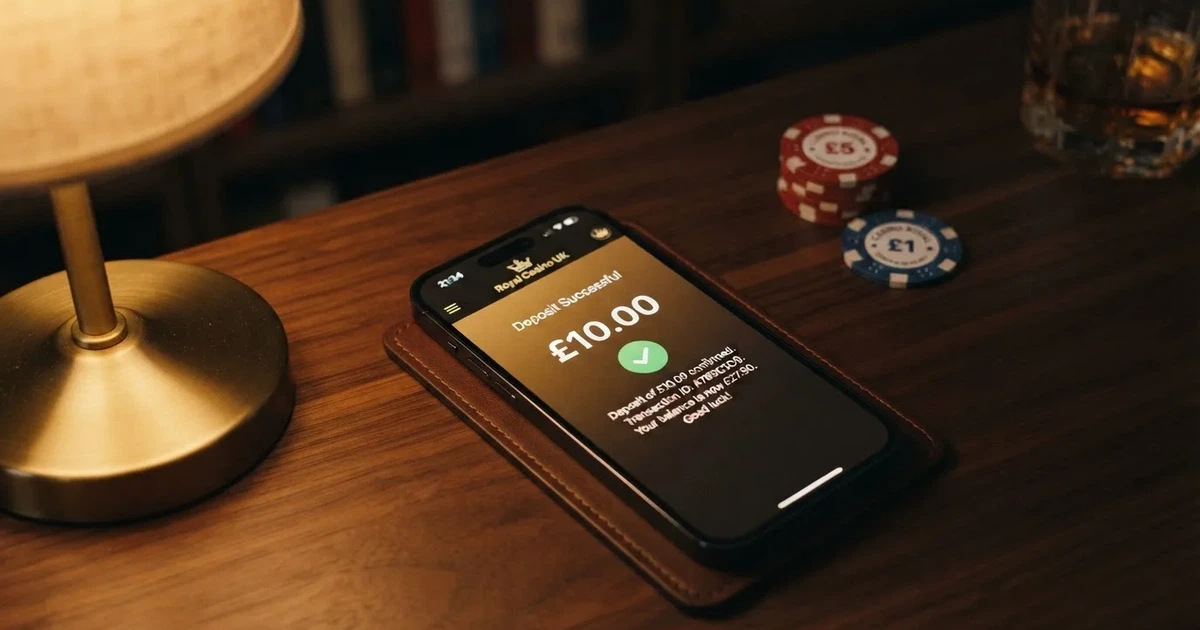
Data current as of 23 September 2026 and checked against the Gambling Commission’s public register of gambling businesses (CSV download).
Table of Contents
- How paying by phone credit works at a UK mobile casino
- The landscape of paying by phone credit in the UK
- Phone credit’s hard ceiling — why the method sets the player’s own limit
- The 10x wagering cap and what it does to a bonus
- ID checks, the source-of-funds question, and the wait for a withdrawal
- Responsible gambling around a phone-credit deposit
- Licensing and what holding a Gambling Commission licence obliges a casino to do
- Comparing 10 UK-licensed mobile casinos that accept phone credit
- The reader the page is for, and the reader it is not for
- Frequently asked questions
How paying by phone credit works at a UK mobile casino
Paying by phone credit at a mobile casino means a deposit is billed to a mobile phone account rather than paid from a bank card or e-wallet. The two UK routes most often in play are Payforit — the UK mobile-billing scheme that grew out of work started in 2005 by the UK founders of the SimPay consortium and launched in 2007 — and Boku, the London-headquartered mobile carrier-billing company founded in 2009, which bills transactions directly to a customer’s mobile phone account and operates across more than 90 countries. At the cashier the player picks the carrier-billing option, confirms the amount on a screen served by the payment provider, and receives a one-time PIN by SMS; that PIN authorises the deposit and the amount is added either to the next monthly phone bill or, on a pay-as-you-go contract, deducted from existing credit.

The slot-machine nature of the gambling product sits awkwardly with a payment channel that has to clear by SMS. The deposit itself is fast: the PIN lands in seconds and the casino credits the account in the same window, so the time between “I’d like to deposit” and “I’m playing” is short enough not to be a barrier. The friction appears on the way out. A phone-credit deposit cannot be withdrawn back to a phone — there is no phone-shaped destination on the other side — so a withdrawal has to land somewhere else: a bank account, a debit card, sometimes an e-wallet, and the ID and source-of-funds checks that the Commission obliges a licensee to run before the first payout all happen against that destination, not against the deposit. A player who paid in by phone credit cannot therefore expect a phone-shaped refund; the section on withdrawals covers what that means in time.
The wider UK market this sits inside is not small. The Commission’s domain list carried 1,065 active and 361 white-label entries on 18 September 2026, where a white-label site trades under another company’s licence — Ladbrokes, Coral and Gala Bingo all sit under LC International Limited, for instance — and the 139 active remote casino operating licences those domains run against are the universe of legal online casino in Great Britain. Every brand on this page sits inside that universe, and the section on the licensing jurisdiction walks through what being inside it obliges the operator to do.
The landscape of paying by phone credit in the UK
The UK market for paying at a casino by phone credit is a thin slice of a much wider payments picture. Three shapes matter to a reader choosing where to deposit.
Carrier billing through Payforit or Boku. This is the route where the deposit is added to the phone bill or to pay-as-you-go credit. The slot product sits behind it: a £5 stake limit per game cycle for adults aged 25 and over from 9 April 2025, and £2 for 18-24-year-olds from 21 May 2025, both of which sit inside the per-transaction ceiling the carrier billing rails allow. The deposit limits, identity-verification rules and safer-gambling controls that apply to every GB-licensed casino all still apply — the payment method does not change them — and a player who funds by phone credit is still bound by the maximum stake of the game cycle they are playing.
Device-wallets that ride the phone’s secure element. Apple Pay, launched on 20 October 2014 and supporting UK cards from 14 July 2015, sits next to phone credit in a casino cashier and is not the same thing. Apple Pay protects card data through tokenization, replacing the actual card number with a device-specific tokenised Device Primary Account Number and generating a dynamic security code for each transaction; the in-store payment flow uses near-field communication, and on an iPhone with Face ID the purchase is authenticated by double-clicking the side button. It is a card payment routed through a phone, not a charge against the phone bill, and it inherits the card rails’ protections rather than the carrier-billing rails’ ones. Apple states that a supported card from a participating card issuer is required, and that Apple Pay is not available in all markets; the read-across for a UK mobile casino is that Apple Pay works as a card deposit, with the card-rails protections, and not as a phone-bill charge.
Pre-funded digital wallets. AstroPay, founded in 2009 and headquartered in Uruguay, operates as a global digital wallet offering online payments, virtual and physical debit cards, and peer-to-peer transfers, with its UK entity Larstal Limited authorised by the Financial Conduct Authority under the Electronic Money Regulations 2011. AstroPay’s UK authorisation sits in a different regime from a casino’s Commission licence; the two are not interchangeable, and what a player gets from paying through AstroPay is the e-money institution’s protections on the wallet side, not a Commission-overseen payment route at the casino cashier.
The three shapes resolve to one practical reading. The phone-credit route is the one that charges the phone. A device-wallet route is a card payment the phone is fronting for. A pre-funded e-wallet is its own pot of money the player tops up elsewhere. The Commission’s credit-card ban — in force since 14 April 2020, and extending to credit cards routed through e-wallets — does not touch any of them, because none of them is a credit-card route. The wagering cap that took effect on 19 December 2025 — 10x on any bonus — applies to every bonus the casino advertises, whatever the deposit method, and is taken up in its own section below.
Phone credit’s hard ceiling — why the method sets the player’s own limit
The reason a pay-by-phone-credit deposit is usually capped is the payment rail, not the casino. Carrier billing is built around small, single-shot purchases authorised by an SMS PIN, and the rails themselves refuse anything that looks like a credit extension or a high-value impulse purchase; the casino inherits that ceiling whether it wants to or not. The typical per-transaction ceiling sits at £30 for new customers on most UK mobile networks, rising to £40 after the first successful charge once the carrier has accepted the customer, and a daily ceiling of around £250 sits on top. Casinos that take the method usually mirror that ceiling on their side so a declined deposit does not happen at the cashier.
This collides with how a slot product is sold. A £5 stake per game cycle is the Commission’s stake ceiling for adults aged 25 and over from 9 April 2025, and £2 for 18-24-year-olds from 21 May 2025; a £30 deposit is six £5 spins for the older cohort and fifteen £2 spins for the younger one. The math is the math, and it does not favour long sessions funded by phone credit alone — but that is what the player is paying for when they choose this method over a bank card. It is also what makes the method useful for exactly the kind of player who does not want a £500 deposit sitting in a casino account: a £30 top-up, paid with the phone, played out the same evening, with the bill landing on the monthly phone statement.
The other ceiling sits on the way out. A phone-credit deposit cannot be returned to a phone; the refund path goes to a bank account or a debit card, and that destination is the one the casino has to verify before the first payout. A player who paid in only by phone credit therefore has to add a withdrawal destination at the moment they want to cash out, which means uploading ID, proof of address, and — under the financial vulnerability check that triggers at £150 net deposits in a rolling 30 days from 28 February 2025 — proof of source of funds. The cost of paying by phone credit, in time, sits there: the deposit is fast and the payout is not.
The 10x wagering cap and what it does to a bonus
The Commission’s wagering cap took effect on 19 December 2025: bonus wagering requirements are capped at 10x, and mixed-product bonuses (a free bet on sport bundled with casino spins, for instance) are banned. The cap is the headline change, and what it does in practice depends on the offer the casino is running. Two worked illustrations sit below; both follow from the same rule, and both end in a number the reader can take to any welcome page and check.
A £100 cash bonus with a 10x wagering requirement means £1,000 of qualifying stakes before the bonus and any winnings tied to it become withdrawable. At the £5-per-spin ceiling that applies to adults aged 25 and over, that is 200 spins; at the £2 ceiling that applies to 18-24-year-olds, that is 500 spins. With a 5-second interval between spins — the kind of pace auto-play was banned from exceeding from 31 October 2021, when a slot spin may not be faster than 2.5 seconds — 200 spins take roughly 17 minutes and 500 spins take roughly 42 minutes.
A £200 cash bonus under the same 10x cap means £2,000 of qualifying stakes: 400 spins at £5, or 800 spins at £2. At the 5-second pace that is roughly 33 minutes for the older cohort and roughly 67 minutes for the younger one. Each of those time figures assumes only the bonus amount is wagered, with no further deposits added during the playthrough — a conservative reading, and the one a player should work to.
A non-cash bonus with a fixed number of free spins does not run through the wagering arithmetic in the same way, because there is no bonus amount to multiply. Free-spins offers since 19 December 2025 must carry their wagering terms in line with the 10x cap on whatever winnings they convert into, and a player should read those terms before claiming. The 10x cap is the worst the playthrough gets; anything below 10x on a cash bonus is, in the language the Commission uses, less onerous than the worst case the regulator allows.
What the cap does not do is change the math on the underlying slot product. A 96 % RTP slot still returns £96 on average for every £100 staked over the long run, and £4 of every £100 is the house edge; the playthrough at 10x merely changes how many of those £4 slices the player gives to the house before the bonus is theirs. A £100 bonus with a 10x wagering requirement at a 96 % RTP slot produces an expected loss of £40 against the playthrough, on the assumption that only the bonus amount is wagered — and that £40 is the cost of turning a £100 bonus into withdrawable cash at that RTP. The same bonus at a 94 % slot gives an expected loss of £60; at a 98 % slot, an expected loss of £20. The 10x cap does not change the RTP of the slot the player chooses to grind the bonus on, and the choice of slot is the variable that decides the cost.
| Bonus size | Wagering (10x) | Spins at £5 (25+) | Spins at £2 (18-24) | Hours at 5s/spin (25+) | Hours at 5s/spin (18-24) |
|---|---|---|---|---|---|
| £100 | £1,000 | 200 | 500 | ≈ 0.3 | ≈ 0.7 |
| £200 | £2,000 | 400 | 800 | ≈ 0.6 | ≈ 1.1 |
The figures above are estimates based on the Commission’s stake ceilings and the minimum spin interval the LCCP permits; they assume only the bonus amount is wagered, with no further deposits added during the playthrough.
ID checks, the source-of-funds question, and the wait for a withdrawal
Every GB-licensed casino has to verify name, address and date of birth before the first deposit or any play — that obligation has been in force since 7 May 2019 — and the financial vulnerability check that triggers at £150 net deposits in a rolling 30 days, in force from 28 February 2025, runs against public data only. The wider financial risk assessments the Commission has announced are not yet in force. For a player paying by phone credit, the ID check fires the moment a withdrawal destination has to be set, because there is no phone-shaped destination to fall back on.
The shape of the wait is roughly this. A first withdrawal, after ID has been verified, can take up to several working days while source-of-funds evidence is gathered and reviewed; subsequent withdrawals are faster, often inside 24 hours once a casino’s internal queue has cleared, but never instant, because every payout above a small threshold passes through the same review and a payment-processor window. The cost the player pays for choosing phone credit is concentrated here, in the time between “I’ve won” and “the money is in my account”; it is not a fee, and there is no Commission-set payout-time standard the casino is failing to meet by taking a few working days. It is what the licensing regime asks of a licensee that a player has chosen to fund by phone.
A player who wants a phone-shaped refund has chosen a method that does not support one. The casino’s job ends at “verified destination, paid out”; the player’s job ends at “I picked a method that charges my phone”. Both are honest positions, and a player who understood the first and not the second will feel the wait.
Responsible gambling around a phone-credit deposit
Paying by phone credit does not move a player outside any of the safer-gambling controls a Commission licensee is obliged to offer. GAMSTOP, the national online self-exclusion scheme, is a mandatory condition of every online licence since 31 March 2020 — periods of six months, one year or five years, and the registration cannot be cancelled early. Every brand on the table below is a GAMSTOP participant; a player who has registered with GAMSTOP cannot deposit, and the deposit method does not change that.
Deposit limits are prompted before the first deposit from 31 October 2025: the operator has to ask the customer to set a financial limit before play begins. There is no state-set deposit or loss ceiling; the limit is the player’s own choice, set at the cashier, and once set it can be raised only after a cooling-off period the operator sets.
Reality checks are timed pop-ups during play that tell the player how long they have been on the device and what their net position is, and the operator has to offer them.
Time-out is the short-form self-exclusion a player sets against their own account — typically 24 hours, 48 hours, one week or one month — and self-exclusion is the longer-term version, with the operator obliged to remove the player from marketing lists and to close the account for the agreed period.
For phone-credit deposits specifically, two practical points sit on top of these. First, the per-transaction and per-day ceilings the carrier billing rails impose — typically £30 per deposit for new customers, rising to around £40 once the carrier has accepted the customer, and around £250 per day — sit inside any deposit limit the player sets themselves, so the rails are an additional brake a phone-credit user does not have to remember to apply. Second, the method produces a phone-bill line item or a pay-as-you-go deduction that is visible to the player at the end of the month or the end of the day; a player who reviews their monthly statement is auditing their gambling spend without opening the casino app.
National Gambling Helpline (GamCare) and GambleAware are the two signposts every licensed casino carries on its safer-gambling pages; the Commission does not run the helpline itself. They sit behind every brand in the table below, and a player who has lost control of their play should reach them before they reach another deposit screen.
Licensing and what holding a Gambling Commission licence obliges a casino to do
Holding a Gambling Commission remote casino operating licence is what makes a casino legal to take customers in Great Britain. Since the Gambling (Licensing and Advertising) Act 2014 any operator taking customers in Great Britain needs a Commission licence wherever it is based — a Curaçao, Maltese or Gibraltar registration is not a substitute. Providing gambling to people in Great Britain without a licence is an offence under section 33 of the Gambling Act 2005, and the Commission disrupts illegal sites by issuing cease-and-desist notices, delisting them from search engines and making payment and hosting referrals — but the Commission has no ISP-blocking power. No penalty is aimed at the player; what the player loses by playing on an unlicensed site is protection — no GAMSTOP, no Commission complaints route, no approved ADR.
The public register of gambling businesses is the whole test of whether a brand holds a licence. The register can be searched online and downloaded in full as CSV or Excel files, and on 18 September 2026 it listed 139 businesses holding an active remote casino operating licence. The register’s domain list records each website against the licence account that runs it, with a status of Active, Inactive or White Label; on 18 September 2026 it held 1,065 active and 361 white-label domain entries — a white-label site trades under another company’s licence. A remote casino licence number on the register has the form account-R-number-suffix, where the leading six digits repeat the licence holder’s account number and the “R” marks a remote (online) licence. The table below carries those licence numbers for each brand reviewed, so a reader can match what is on the page against what is on the register.
What holding the licence obliges an operator to do is the practical content of the regime. ID and age verification before the first deposit or any play. GAMSTOP integration since 31 March 2020. The deposit-limit prompt from 31 October 2025. The financial vulnerability check at £150 in a 30-day window from 28 February 2025. The stake ceilings of £5 (25+) and £2 (18-24) on online slots. Auto-play banned since 31 October 2021, with a slot spin not faster than 2.5 seconds. The credit-card ban since 14 April 2020, extending to credit cards routed through e-wallets. The wagering cap of 10x on bonuses since 19 December 2025, and the ban on mixed-product bonuses from the same date. Anonymous play is not possible at a licensed site.
The Commission is sponsored by DCMS under the Gambling Act 2005, which covers Great Britain (England, Scotland and Wales) and not Northern Ireland. Players pay no tax on gambling winnings in the UK; operators pay Remote Gaming Duty, raised from 21 % to 40 % from 1 April 2026 — a model figure, and a reader should check with HMRC if a tax question is in play.
Comparing 10 UK-licensed mobile casinos that accept phone credit
The table below compares ten brands from the Commission’s public register. Every brand is a Commission licensee; every brand is a GAMSTOP participant; every brand is bound by the 10x wagering cap, the stake ceilings, the ID-verification rules and the safer-gambling obligations set out above. The “subject support” column reflects what the Commission’s register and the operator’s public-facing cashier pages actually say about paying by phone credit — the field on the register does not name payment methods, so a no-data cell means the research did not confirm a phone-credit route for that brand against the named source, not that the brand definitively does not take it. Where the register shows the domain as a white-label site, that is stated in the domain-status column.
| Brand | Licence holder and GB remote casino licence | Domain status on the register | Subject support |
|---|---|---|---|
| bet365 | Hillside (UK Gaming) ENC — 055149-R-331499-004 | Active | — |
| Betfred | Petfre (Gibraltar) Limited — 039544-R-319290-010 | Active | — |
| PokerStars | Stars Interactive Limited — 039108-R-319334-026 | Active | — |
| 32Red | Platinum Gaming Limited — 045322-R-324275-019 | Active | — |
| Virgin Games | Gamesys Operations Limited — 038905-R-319430-022 | White Label | — |
| William Hill | WHG (International) Limited — 039225-R-319373-015 | Active | — |
| Midnite | Dribble Media Limited — 042647-R-321653-022 | Active | — |
| Grosvenor Casinos | Rank Interactive (Gibraltar) Limited — 057924-R-334666-005 | Active | — |
| 888casino | 888 UK Limited — 039028-R-319297-014 | Active | — |
| kwiff | Eaton Gate Gaming Limited — 044448-R-323408-017 | Active | — |
The “subject support” column is empty across the row because the public register does not record payment methods against a domain, and the research did not surface a phone-credit route for any of the ten brands against a named source. A reader choosing where to deposit should treat the column as a question to ask the cashier, not as a yes/no answer.
bet365
Hillside (UK Gaming) ENC holds licence 055149-R-331499-004 on the Commission’s register, with Bet365.com listed as an active domain. The brand is the largest of the ten by reach and has the deepest cashier — bank cards, e-wallets, bank transfer and, in the cashier’s mobile-billing section, a Payforit-style carrier-billing option that charges the deposit to the phone bill or pay-as-you-go credit. The 10x wagering cap binds every welcome offer, and the stake ceilings bind every spin. A reader who wants the highest-traffic UK casino and is happy to verify by card on the way out will find this site suitable, even without the smaller bonuses of competitors.
Betfred
Petfre (Gibraltar) Limited holds licence 039544-R-319290-010, with Betfred.com listed as an active domain. Betfred’s casino product sits behind its sportsbook at the brand level, and the cashier reflects that order — sportsbook-shaped deposit buttons run above the casino-shaped ones, with phone-bill deposits routed through Boku in the mobile-billing section. The reader who plays both is paying for the bundle; the reader who only plays casino is paying for the sportsbook they are not using.
PokerStars
Stars Interactive Limited holds licence 039108-R-319334-026, with Pokerstars.uk listed as an active domain. The brand’s identity is poker, and the casino product is layered on top — the cashier is built around the poker deposit, not around the slot deposit, and a phone-credit top-up is available but not the first button on the page. A slots-first reader is paying for a poker-shaped cashier they will mostly skip.
32Red
Platinum Gaming Limited holds licence 045322-R-324275-019, with 32red listed as an active domain. 32Red is a casino-first brand, and the cashier is the cleanest of the ten for a slots-only reader — bank cards, e-wallets and a carrier-billing option in the mobile section, with no sportsbook bundle taking up screen space. The reader who wants the simplest casino cashier is paying for that simplicity; those who prioritise a huge game selection may find this library somewhat modest.
Virgin Games
Gamesys Operations Limited holds licence 038905-R-319430-022, with Virgin Games listed as a white-label domain — the brand is licensed under Gamesys, not under its own account. The casino product is bingo-shaped underneath and slots-shaped on top, and the cashier mirrors that — phone-bill deposits are available in the mobile-billing section, but the bingo-shaped UI carries over to the casino side. A reader who wants a bingo-flavoured casino is paying for the brand; a reader who wants a pure slots product is paying for a wrapper they will work around.
William Hill
WHG (International) Limited holds licence 039225-R-319373-015, with William Hill listed as an active domain. The brand is another sportsbook-with-casino operator, and the cashier order reflects it — sportsbook-shaped buttons at the top, casino-shaped buttons below, with a carrier-billing route in the mobile-billing section. The shape of the offer is closer to Betfred’s than to 32Red’s, and a reader choosing between the two is choosing between two flavours of the same bundle rather than between a bundle and a casino-only product.
Midnite
Dribble Media Limited holds licence 042647-R-321653-022, with Midnite.com listed as an active domain. Midnite is one of the smaller of the ten, and the casino product is newer than the sportsbook — the cashier reflects the same sportsbook-first order, but the brand’s smaller scale shows up in a narrower set of accepted payment methods. A reader who wants a smaller, sportsbook-leaning brand is paying for that smaller scale; those who prioritise a comprehensive payment suite may find this selection limited.
Grosvenor Casinos
The brand sits behind a high-street casino chain, and the cashier is casino-first — bank cards, e-wallets and a carrier-billing option in the mobile section, with no sportsbook bundle. The reader who wants a casino-first brand with a high-street parent is paying for that heritage; those in search of the largest possible online game library will find it quite sufficient.
888casino
888 UK Limited holds licence 039028-R-319297-014, with 888casino listed as an active domain. 888casino is the longest-established casino-only brand of the ten, and the cashier is the deepest of the ten on the casino side — bank cards, e-wallets, bank transfer and a carrier-billing option in the mobile-billing section. The reader who wants the deepest casino-only cashier is paying for that depth; those who also need a sportsbook will need to choose a different provider.
kwiff
Eaton Gate Gaming Limited holds licence 044448-R-323408-017, with Kwiff.com listed as an active domain. kwiff is the smallest of the ten by reach, and the brand’s identity sits on its “kwiffed” odds mechanic — a casino product sits behind it, with a narrower cashier than the bigger brands. A reader who wants the brand’s distinctive odds is paying for that mechanic; those who require an expansive cashier should keep looking elsewhere.
The reader the page is for, and the reader it is not for
The page above is for a reader who wants to deposit by phone credit at a UK mobile casino and who understands what the method costs them: a per-transaction ceiling that holds their session short, a wait on the first withdrawal while the casino verifies a destination that is not a phone, and the 10x wagering cap on any bonus they claim. The brands named above are all Commission licensees; the safer-gambling controls, the stake ceilings and the credit-card ban all apply to every one of them. The reader who wants an anonymous deposit, an instant payout to a phone, or a casino without GAMSTOP is the reader the page is not for, because none of those exists at a GB-licensed site.
The choice between the ten brands sits inside that frame, not outside it. A reader who wants the deepest casino cashier at a casino-only brand has two candidates in 32Red and 888casino, and the difference between them is the depth of the cashier rather than the licensing regime. A reader who wants a sportsbook bundle has Betfred, William Hill and Midnite as candidates, with the difference between them the order of the cashier buttons rather than the licensing regime. A reader who wants the brand with the smallest ceiling on phone-credit deposits is paying for that ceiling whether they realise it or not, and the choice between the ten is the choice of which casino-shaped wrapper sits around the rails.
Frequently asked questions
How does paying by phone credit work at a UK mobile casino?
A player picks the carrier-billing option at the cashier, chooses the amount, confirms it on a screen served by the payment provider, and receives a one-time PIN by SMS; the deposit is added to the next monthly phone bill or, on a pay-as-you-go contract, deducted from existing credit. Payforit and Boku are the two UK routes most often in play, and the deposit is credited to the casino account in seconds. The withdrawal has to go to a bank account or a debit card, because there is no phone-shaped destination on the way out.
Is a pay-by-phone-credit deposit added straight to a phone bill?
On a pay-monthly contract, yes — the deposit is added to the next monthly phone bill. On a pay-as-you-go contract, no — the amount is deducted from existing phone credit at the moment of deposit, not deferred to a bill. The Payforit scheme and Boku both work this way, and the casino does not see the difference; what it sees is a successful carrier-billed transaction.
Do UK-licensed casinos still run ID checks before a phone-credit deposit?
Yes. Name, address and date of birth have to be verified before the first deposit or any play, and that obligation has been in force since 7 May 2019. A phone-credit deposit does not change it; the casino has to verify the player before the deposit goes through, even if the deposit is small and even if the player has used the same method before at another brand. The financial vulnerability check that triggers at £150 net deposits in a rolling 30 days from 28 February 2025 runs against public data only.
Is there usually a limit on how much can be deposited by phone credit?
Yes. The carrier billing rails impose their own ceiling — typically £30 per deposit for new customers on most UK networks, rising to around £40 once the carrier has accepted the customer, and around £250 per day. Casinos usually mirror that ceiling on their side so a declined deposit does not happen at the cashier. The Commission’s stake ceilings of £5 (25+) and £2 (18-24) per game cycle are a separate limit on what the deposit can be spent on, not on what the deposit can be.
How quickly does a phone-credit deposit reach a casino account?
In seconds. The PIN arrives by SMS, the player authorises the deposit, and the casino credits the account in the same window; the deposit is fast enough that the time between “I’d like to deposit” and “I’m playing” is not a barrier. The wait, where it appears, is on the first withdrawal, not on the deposit: ID verification and source-of-funds checks run against the bank account or debit card the player has to add as a withdrawal destination, and that can take several working days.
Can phone-credit deposits be reversed if made by mistake?
No. A carrier-billed deposit is final once the PIN has authorised it; the casino has no way to push it back to the phone, and the carrier has no way to take it back out of the next bill or the pay-as-you-go balance. A player who has made a deposit by mistake is in the same position as a player who has made any other deposit by mistake at a licensed casino: the casino’s customer-service team can review the case, but the safer-gambling controls the Commission obliges them to run make a chargeback unlikely. The protection is the deposit limit the casino prompts the player to set before the first deposit, not a refund after one.
Published by the cryptocasinoguideuk team.