Best bingo casinos UK: where rooms, slots and a UK licence meet
 Available in GB
Data current as of 23 September 2026 and cross-checked against the Gambling Commission’s public register.
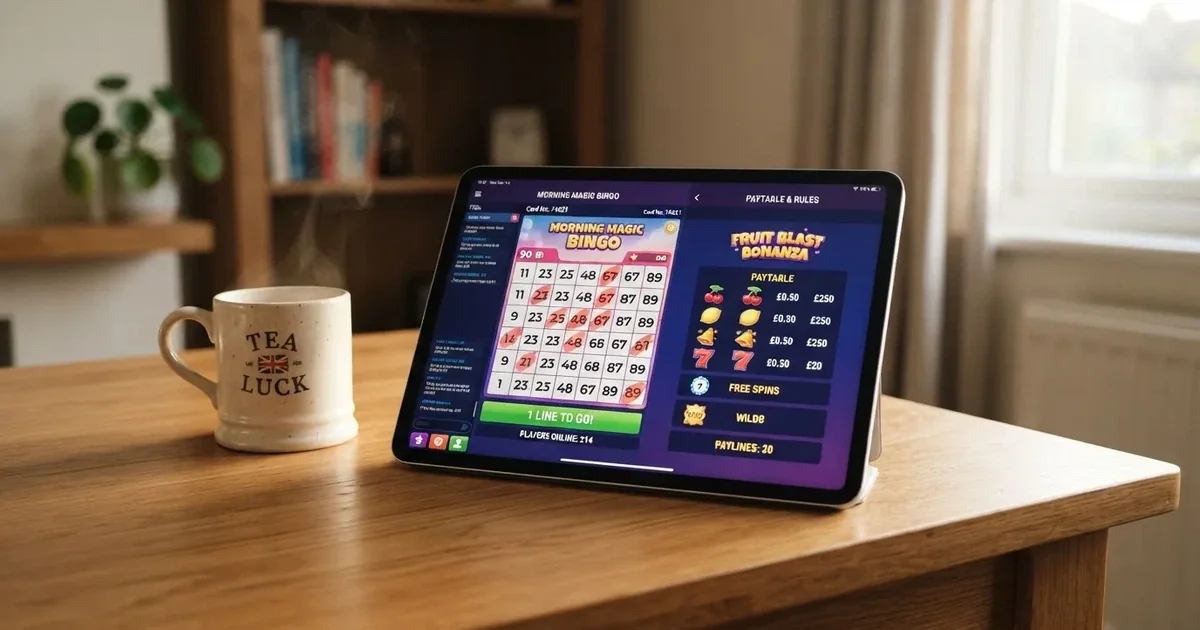
A bingo casino is, in practice, two products sitting under one account. The first is a bingo room — numbers drawn on a fixed cadence, tickets bought with a stake, prizes paid from the pot. The second is a slot catalogue, often the bigger of the two by volume. The way a UK site joins them — a single wallet, a shared bonus, a shared self-exclusion — is what makes the combined offering worth analysing, and what makes the licence question worth raising. Every brand on this page is a Gambling Commission licence holder; the comparison below sits inside that frame, and the frame is the first thing a player should know.
Table of Contents
- What a UK bingo casino actually is
- How this list was assembled
- Responsible gambling tools at a bingo casino
- Payments and payout speed
- Bonuses, free spins and the 10x cap
- Mobile and app play
- The games themselves: rooms, providers and the slot catalogue
- Top 10 licensed UK bingo casinos
- Choosing among them
- The legal frame in one paragraph
- Frequently asked questions
What a UK bingo casino actually is
The game itself has a longer history than the licence regime around it. Bingo traces back to the Italian lottery of around 1530, migrated through France as Le Lotto and reached Great Britain in the 18th century, before Edwin S. Lowe patented the modern card design in 1942 and the Betting and Gaming Act 1960 legalised large cash prizes from 1 January 1961. What a player meets today is the standard British 90-ball ticket: 27 spaces across nine columns and three rows, with three winning patterns — one line, two lines and a full house of fifteen numbers.

The legal definition is unusually thin. The Gambling Act 2005 is the only major piece of gambling statute that defines bingo only by reference to itself, saying bingo means “any version of that game, irrespective of by what name it is described.” Section 8 of the Act adds one rule that shapes how every site runs: bingo must be equal-chance gaming, so no player plays against a bank and the chances of winning must be equally favourable to all participants. That rule is why a licensed site cannot quietly tilt the draw.
A bingo-linked slot is something else. It carries the bingo theme — daubers, 90-ball tickets, calls like “two fat ladies” or “legs eleven” — but it is a regular slot machine: a Random Number Generator, a paytable, a Return to Player percentage and a stake per spin. The Gambling Commission’s slot rules apply to it in full. That is the seam this article runs along.
How this list was assembled
Ten brands, each one matched to a current entry on the Gambling Commission’s public register. The register is the only authoritative test of whether a brand is licensed to take UK deposits; the comparison below is built on what it shows, plus the published terms each brand sets.

A remote casino licence number on the register has the form *account*-R-*number*-*suffix*, where the leading six digits repeat the licence holder’s account number and the “R” marks a remote (online) licence. As of the register snapshot of 18 September 2026, the Commission listed 139 businesses holding an active remote casino operating licence, and the accompanying domain list recorded 1065 active domains and 361 white-label domains. A white-label domain is one that trades under another company’s licence — Virgin Games, for instance, runs on Gamesys Operations Limited’s licence rather than its own. That detail matters when two familiar brand names turn out to be one operator in the Commission’s view.
The comparison table at the head of the ranking reflects only what the register and each brand’s public terms show. Where a brand has not published a particular figure, the cell carries an em dash. A blank is not a verdict; it is a missing measurement.
Responsible gambling tools at a bingo casino
A Gambling Commission licence obliges every brand on this page to wire in the same set of player-protection tools. They apply to bingo play exactly as they do to slot play — the licence does not carve bingo out.
GAMSTOP self-exclusion is the headline mechanism. Every GB-licensed online operator must take part, and the periods run six months, one year or five years; once set, they cannot be cancelled early. GAMSTOP covers every brand on this page, and signing up to it closes the door on each one in a single registration. The bet on a single scheme, rather than per-brand opt-outs, is that the player who wants out is taken out completely.
Deposit limits were made mandatory at the first deposit from 31 October 2025 — operators must now prompt a customer to set a financial limit before any money goes in. There is no state-set ceiling, which means the limit is what the player asks for. A 25-year-old player faces the £2 online slot stake ceiling, set from 21 May 2025; over-25s face the £5 ceiling, set from 9 April 2025. The UK government tied the lower £2 limit to under-25s on the grounds that the 18-to-24 group has the highest average problem-gambling score of any age band, alongside ongoing neurological development and lower disposable income. Both ceilings apply per game cycle, so they govern the slot side of the combined offering; bingo ticket purchases carry no comparable ceiling.
Financial vulnerability checks run at £150 net deposits in a rolling 30 days, in force from 28 February 2025, using public data only. Wider financial risk assessments have been announced but are not yet in force. Reality checks and time-outs sit alongside them on the social responsibility code, and the National Gambling Helpline (GamCare) plus GambleAware are the routes a player is pointed to when the tools are not enough.
A point worth keeping in mind: anonymous play is not possible at a licensed site. Name, address and date of birth are verified before the first deposit or any play, a check that has applied since 7 May 2019. That is the trade the licence buys — the site knows who its customer is, and the customer knows the site can be held to account.
Payments and payout speed
The payout picture for a UK bingo casino is, in the main, the same as for any other GB-licensed online operator. Card withdrawals typically clear in one to three working days once the operator has approved the request; e-wallets such as PayPal and Skrill usually arrive inside twenty-four hours; bank transfers can stretch to three to five working days and are the slowest of the common routes. Credit cards are banned for gambling across the board, including cards routed through e-wallets, since 14 April 2020. The Commission banned reverse withdrawals from 31 October 2021, so once a player hits the withdraw button, the money is on its way out — there is no second-thought button that returns it to the playing balance.
The auto-play ban on online slots, also in force since 31 October 2021, and the 2.5-second minimum spin speed (set by the Commission to stop machine-paced loss) shape how the slot side of a combined site feels. Every spin is a deliberate button press, and a session cannot be automated away. That constraint sits on top of the bonus cost rather than beside it — it lengthens the time the wagering requirement actually takes, even when the math underneath it is unchanged.
The reverse-withdrawal ban also closes a small but persistent leak. Before 2021 a player who asked to withdraw could, in effect, undo the request and keep playing with the funds; the ban removed that option. Combined with the 2.5-second spin floor, it changes the shape of an evening’s play — fewer decisions made on impulse, and the option to stop is a single button rather than a fight with one’s own previous choice.
Bonuses, free spins and the 10x cap
A bingo site’s slots bonus has, since 19 December 2025, sat under a hard ceiling. Wagering requirements are capped at 10x; mixed-product bonuses, where a sports bet unlocks casino spins, are banned. The 10x cap is a structural change in how offers are written, and it sits across every brand on this list. A bonus advertised at £50 with a 10x turnover requirement now means £500 of qualifying play before any of the bonus balance can be withdrawn.
The cost of clearing that bonus can be worked through. Take a £50 bonus at the 10x cap, the standard stake of £1 per spin on a 96% RTP slot, and the Commission’s 2.5-second spin floor. Required turnover is £500; at £1 per spin that is 500 spins; at 2.5 seconds per spin that is 1,250 seconds, or just under 21 minutes. The expected loss over those 500 spins, at 96% RTP, is £500 multiplied by (1 minus 0.96), giving £20. The bonus itself was £50, the expected cost of clearing it is £20, and the player ends the wagering requirement £30 ahead on paper — though a session that runs as expected is a session where nothing went right or wrong by much.
The number that matters is the £20 expected loss, not the 21-minute figure. Time-to-clear is what a player feels; expected loss is what the offer actually costs. Any bonus that markets the time rather than the cost is selling the smaller of the two numbers. The condition that sits behind the calculation — wagering capped at 10x, stake capped per game cycle, RTP at the stated figure — is the same condition that the licence imposes, so the arithmetic here is what a player should assume by default and not what a generous brand has chosen to offer.
How long to clear the bonus: on the inputs above, between roughly 20 minutes and several hours of continuous play, depending on the slot chosen and whether the player takes breaks. The wider band reflects the RTP spread across slots and the stake range a player may prefer.
Mobile and app play
A bingo casino on a phone is, in most cases, the same product as the desktop site — same licence, same wallet, same bonus terms. Where brands differ is in whether they ship a dedicated app or run a mobile browser site. App installs are common among the larger brands; smaller operators tend to keep a responsive browser site and skip the app stores.
The slot side is where the slot floor matters. A spin that takes 2.5 seconds on a desktop takes the same 2.5 seconds on a phone, by Commission rule. Mobile data and signal quality affect how fast the page responds to a tap, not how fast the underlying spin resolves — once the spin is in motion, the result is locked. A weak signal shows up as the gap between the tap and the start of the spin, not as a faster or slower outcome.
A browser site has the practical advantage of requiring no download and no operating-system update cycle. A dedicated app tends to load faster and to support biometric login; it also takes storage on the device and needs an update whenever the brand pushes a new release. For most players the choice is one of habit rather than performance: the underlying game is the same on both.
The games themselves: rooms, providers and the slot catalogue
A 90-ball bingo room on a UK site is built around the standard ticket — 27 spaces, nine columns, three rows — and the standard patterns of one line, two lines and a full house. Tickets sell in strips of six covering every number from 1 to 90. The patterns and the cadence of the draw are dictated by the software the brand licenses, and a remote bingo game host operating licence is the piece of Commission paperwork a software business needs to supply those facilities to a brand — the licence holder supplies other licensed operators rather than contracting directly with customers.
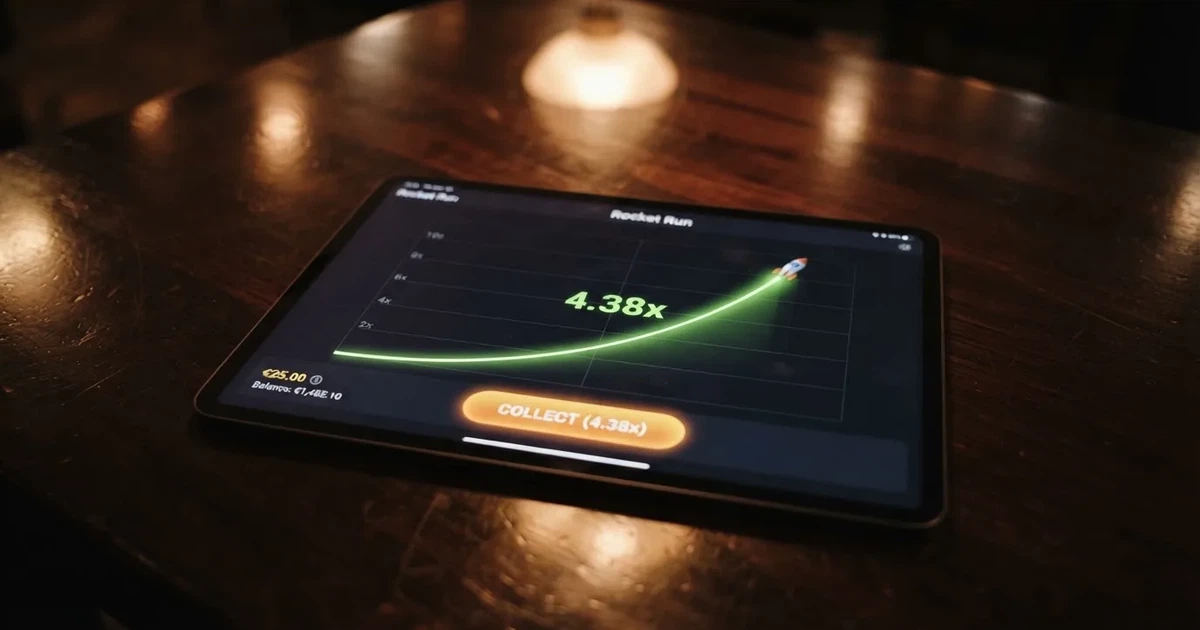
The slot catalogue is wider and less uniform. Studios including NetEnt, Microgaming, Play’n GO, Pragmatic Play and Evolution supply most of the bingo-themed slot content on UK sites; the bingo branding is largely cosmetic and the maths underneath is the studio’s standard. The Crash-style multiplayer game Aviator, developed by Spribe and released in 2019, sits in a different category again: a multiplier curve rises from 1.00x and crashes at random, and a player cashes out before the crash to win the stake multiplied by the current value. Spribe reports more than 42 million active users and around 350,000 bets per minute across more than 5,000 operators worldwide. Crash games are not bingo and not slots, but several UK brands carry them in the same lobby.
Baccarat and Punto Banco sit further from the bingo question and are worth a sentence only because they show up in the same casino lobbies. Punto Banco developed in Havana during the 1940s and is the most widespread form today; the casino banks the game at all times and players make no strategic decisions, with hands dealt out under fixed drawing rules. Chemin de Fer, the variant dominant in France, gives players strategic choices and a skill element. None of this changes the bingo question, but it explains why a UK casino lobby is the size it is — bingo rooms, several thousand slots, live-dealer tables and a few specialty games under one licence.
Top 10 licensed UK bingo casinos
The ten brands below each hold a current Gambling Commission remote casino operating licence. The table that follows is the at-a-glance comparison; the write-ups underneath it cover what the licence tells you, what the public terms tell you, and what the combination leaves a player with.
| Brand | Licence holder and GB remote casino licence | Domain status on the register | Subject support |
|---|---|---|---|
| Paddy Power | PPB Games Limited (account 39411), 039411-R-319335-010 | Active | — |
| kwiff | Eaton Gate Gaming Limited (account 44448), 044448-R-323408-017 | Active | — |
| Betway | Betway Limited (account 39372), 039372-R-319367-029 | Active | — |
| bet365 | Hillside (UK Gaming) ENC (account 55149), 055149-R-331499-004 | Active | — |
| Unibet | Platinum Gaming Limited (account 45322), 045322-R-324275-019 | Active | — |
| 888casino | 888 UK Limited (account 39028), 039028-R-319297-014 | Active | — |
| Virgin Games | Gamesys Operations Limited (account 38905), 038905-R-319430-022 | White Label | — |
| Midnite | Dribble Media Limited (account 42647), 042647-R-321653-022 | Active | — |
| Betfred | Petfre (Gibraltar) Limited (account 39544), 039544-R-319290-010 | Active | — |
| BetVictor | BV Gaming Limited (account 39576), 039576-R-319370-028 | Active | — |
Paddy Power
PPB Games Limited holds the active remote casino operating licence 039411-R-319335-010 on the Gambling Commission register, with Paddy Power listed as an active domain of account 39411. The brand sits inside the Flutter Entertainment group, and the licence account number has not changed across the corporate reorganisations that have moved other Flutter brands around. Paddy Power’s public site carries a full slot catalogue alongside its bingo rooms, with the same wallet and bonus framework applying to both. The combined offering is the brand’s strength: a player who wants slots in the same account as their bingo tickets does not have to think about which product is which. The expected cost of any welcome offer sits under the 10x cap that has applied since 19 December 2025, and the financial vulnerability check at £150 net deposits in 30 days runs on the same schedule as every other GB-licensed operator.
kwiff
Eaton Gate Gaming Limited holds the active remote casino operating licence 044448-R-323408-017, with the kwiff brand listed as an active domain of account 44448. The brand is one of the smaller independent operators on the list by licence account number, and the register’s “Active” status is the cleanest confirmation that the brand is licensed today. The site carries a slot catalogue alongside its bingo rooms, with bonus terms set by the operator within the 10x cap. Where kwiff differs from the larger names is in marketing posture: smaller operators can be more flexible on stake limits within the regulatory ceiling, and the brand has historically advertised surprise mechanics on its slot play rather than a flat welcome package. A player who wants the slot stake flexibility within the regulated ceiling, and does not need a high-volume bingo schedule, will find the combination unusual but licensed.
Betway
Betway Limited holds the active remote casino operating licence 039372-R-319367-029, with the Betway brand listed as an active domain of account 39372. Betway is one of the more established names on the register, and the licence account number reflects that history. The brand runs a substantial slot catalogue alongside bingo rooms, with the shared wallet and shared GAMSTOP registration the player would expect. A player used to a single-brand, large-catalogue product will find the combined offering familiar; the differentiation is in slot studio mix rather than in the bingo schedule. The bonus framework is the 10x cap structure and the standard reality-check intervals.
bet365
Hillside (UK Gaming) ENC holds the active remote casino operating licence 055149-R-331499-004, with the bet365 brand listed as an active domain of account 55149. The licence is the newest of the major-brand accounts on the list, reflecting the more recent issuance of remote casino licences to operators that previously ran sports-led products. bet365’s combined offering is built for a player who wants a single account that handles sports, slots and bingo without separate wallets. The slot catalogue is large, the bingo schedule covers the standard 90-ball patterns, and bonus terms sit under the 10x cap. The volume of play on the brand is the largest of any single name on the register, which has practical consequences for promotional cadence but none for the licence terms that bind the account.
Unibet
Platinum Gaming Limited holds the active remote casino operating licence 045322-R-324275-019, with unibet.co.uk listed as an active domain of account 45322. Unibet is part of the Kindred Group, and the .co.uk domain — rather than .com — is the brand’s UK-facing address, with the Commission register treating it as the active domain. The combined offering covers bingo rooms and a large slot catalogue, with the same GAMSTOP registration applying across the group’s UK-facing brands. A player who has used Unibet’s sports product will find the casino lobby familiar; the brand differentiates on slot tournament cadence more than on bingo schedule.
888casino
888 UK Limited holds the active remote casino operating licence 039028-R-319297-014, with 888casino listed as an active domain of account 39028. The 888 group has been one of the longest-running casino-led names on the UK market, and the licence account number reflects that history. The combined offering leans on the casino side: the slot catalogue is large, the bingo rooms are present but less prominent than at brands built around bingo, and the bonus framework runs under the 10x cap. A player whose priority is the slot catalogue, and who treats bingo rooms as a secondary product, will find the brand’s emphasis matches their own.
Virgin Games
Gamesys Operations Limited holds the active remote casino operating licence 038905-R-319430-022, with Virgin Games listed as a white-label domain of account 38905. The white-label status is the structural point: Virgin Games runs on Gamesys’s licence rather than holding its own. Several other familiar brand names share that licence account through the same mechanism, which is why the Commission’s register is the only reliable test of whether a brand is licensed. The combined offering includes bingo rooms built on Gamesys’s software, with a slot catalogue running alongside. A player choosing the brand for the bingo software first and the brand name second is using it as the register suggests.
Midnite
Dribble Media Limited holds the active remote casino operating licence 042647-R-321653-022, with the Midnite brand listed as an active domain of account 42647. Midnite is one of the more recently licensed names on the list, and the licence account number sits in the range the Commission has issued since 2020. The brand’s combined offering covers bingo rooms and a slot catalogue, with bonus terms under the 10x cap and standard GAMSTOP registration. A player who values a newer operator with a smaller customer base may find the brand a fit; the trade is the smaller loyalty programme against the cleaner licence position.
Betfred
Petfre (Gibraltar) Limited holds the active remote casino operating licence 039544-R-319290-010, with the Betfred brand listed as an active domain of account 39544. The Gibraltar-domiciled licence holder is a common structure among longer-running GB-facing operators and does not affect the Commission’s licensing position; the licence itself is the Commission’s, and the public register treats the brand as Active. Betfred runs a substantial slot catalogue alongside its bingo rooms, with bonus terms under the 10x cap and standard self-exclusion. A player who wants a high-street brand name attached to the account will find the offering familiar.
BetVictor
BV Gaming Limited holds the active remote casino operating licence 039576-R-319370-028, with the BetVictor brand listed as an active domain of account 39576. The brand sits among the longer-running names on the register, with a combined slot and bingo product under one licence. The offering is mid-volume by the standards of this list — a substantial slot catalogue and a regular bingo schedule, without the volume of bet365 or the casino specialisation of 888casino. A player who wants a long-running GB-licensed brand without a dominant product specialisation will find the combination fits.
Choosing among them
The ten brands above share four things: a current Commission licence, GAMSTOP coverage, the 10x wagering cap, and the same slot stake ceilings by age band. They differ in slot catalogue volume, in bingo schedule, in app versus browser, and in which product the brand treats as primary.
For a player whose primary product is bingo, the comparison narrows to brands with the strongest bingo schedule and the cleanest licensing — those with “Active” rather than “White Label” domain status on the register. Virgin Games runs on Gamesys’s software under a white-label arrangement, and a player who treats the underlying software as the differentiator will find that distinction useful. The other nine sit as Active domains, with their own licence accounts and their own bonus frameworks.
For a player whose primary product is slots, the comparison runs the other way. bet365 and Betway carry the largest slot catalogues; 888casino leans on the casino side historically; Unibet, Paddy Power and Betfred occupy the middle. The 10x wagering cap applies to all of them, so the bonus-cost arithmetic is the same across the list; what differs is the slot studio mix and the promotional cadence.
For a player who values a smaller operator with a recently issued licence, Midnite and kwiff sit on the newer end of the account-number range. The Commission’s licensing standards are the same across the list, but the licence account number is a useful proxy for how recently the brand has gone through the Commission’s application process.
For a player who would rather not be on a brand at all, GAMSTOP self-exclusion closes every brand on this list in a single registration. The periods run six months, one year or five years, and the registration cannot be cancelled early. That is the cleanest off-ramp, and it sits in front of every comparison on this page.
The legal frame in one paragraph
The Gambling Commission is the regulator, sponsored by DCMS, under the Gambling Act 2005, which covers Great Britain — England, Scotland and Wales — and not Northern Ireland. Since the Gambling (Licensing and Advertising) Act 2014, any operator taking customers in Great Britain needs a Commission licence wherever it is based. The register is the whole test of whether a brand holds one: 139 active remote casino operating licences on the snapshot of 18 September 2026, with 1065 active and 361 white-label domains under them. Minimum age is 18; identity is verified before the first deposit or any play; credit cards are banned; wagering requirements are capped at 10x; mixed-product bonuses are banned. Anonymous play is not possible at a licensed site. Providing gambling to people in Great Britain without a licence is an offence under section 33 of the Gambling Act 2005; the Commission disrupts illegal sites through cease-and-desist notices, search-engine delisting and payment and hosting referrals, but has no ISP-blocking power. The penalty for the player on an unlicensed site is the absence of protection — no GAMSTOP, no Commission complaints route, no approved ADR. Players pay no tax on gambling winnings in the UK; operators pay Remote Gaming Duty, raised from 21% to 40% from 1 April 2026.
Frequently asked questions
What is the difference between a bingo room and a bingo-linked slot?
A bingo room is a real-money game of 90-ball bingo played against other players, with tickets bought for a stake and prizes paid from the pot under the equal-chance rule of section 8 of the Gambling Act 2005. A bingo-linked slot is a standard online slot — Random Number Generator, paytable, Return to Player — with bingo-themed graphics such as daubers, 90-ball tickets and number-call references. The slot is governed by the Commission’s slot rules in full, including the £5 or £2 stake ceiling and the 2.5-second minimum spin time.
Are there bingo slots available with no deposit required to try?
A no-deposit bonus is a promotional offer some GB-licensed brands publish for new accounts, allowing a player to try slots without an initial deposit. The same 10x wagering cap that applies to deposit-gated bonuses applies here, and any winnings remain bonus funds until the wagering requirement is cleared. Identity verification still runs before play, since anonymous play is not possible at a licensed site.
What wagering terms usually apply to a bingo site’s slots bonus?
Since 19 December 2025, wagering requirements are capped at 10x the bonus amount across the UK market. Mixed-product bonuses — for example, a sports bet unlocking casino spins — are banned. Game-cycle stake limits sit at £5 for over-25s and £2 for 18-to-24-year-olds, and reverse withdrawals have been banned since 31 October 2021. The exact terms vary by brand and are published in each operator’s bonus terms page.
Is there a dedicated app for bingo casinos, or only a browser site?
Both models exist on the UK market. Several of the larger brands ship dedicated iOS and Android apps with biometric login and faster lobby load times; smaller operators tend to keep a responsive browser site and skip the app stores. The underlying game is the same — the Commission licence covers the product rather than the delivery channel — but a player choosing between an app and a browser site is choosing a habit rather than a different game.
How is a bingo casino’s payout speed compared with a standard slots site?
Payout speed is governed by the payment method rather than by the game. Card withdrawals typically clear in one to three working days after operator approval; e-wallets such as PayPal and Skrill usually arrive inside twenty-four hours; bank transfers can take three to five working days. Credit cards are banned for gambling. A bingo casino running on the same Commission’s framework will clear payments on the same schedule as any other licensed slots site.
Must a bingo casino be licensed by the Gambling Commission to accept UK players?
Yes, under the Gambling Act 2005 and the Gambling (Licensing and Advertising) Act 2014. Any operator taking customers in Great Britain needs a Commission licence, wherever it is based; a Curaçao, Maltese or Gibraltar operating licence is not a substitute. The public register is the test of whether a brand is licensed, and providing gambling to people in Great Britain without one is an offence under section 33 of the Act.
Written by the editors at cryptocasinoguideuk.