Slot tournaments at UK online casinos in 2026: what the leaderboard format actually costs you
Current as of 7 November 2026 · Verified against the Gambling Commission’s public register
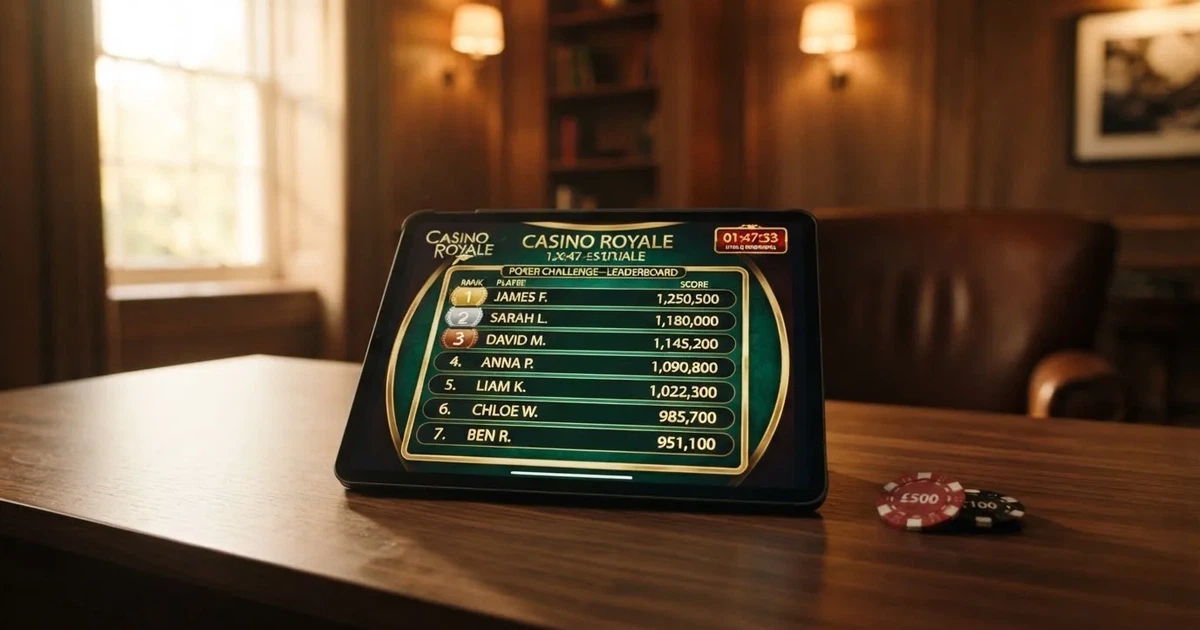
A slot tournament turns ordinary spins into a race. Everyone plays the same game over the same window, the casino tallies a score, and the top names on the leaderboard share a prize pool. It sounds simple, and the marketing leans into that. What sits underneath is a set of rules about entry, scoring and prize money that decide whether a tournament is worth a player’s time at all. This page works through those rules for British players — who can legally run one, how the score gets counted, what a no-deposit tournament really gives you, and what the price of chasing a leaderboard position looks like once the wagering cap and the slot stake limits are taken into account.
Table of Contents
- Responsible play around leaderboard formats
- Crypto deposits and tournament entry
- Payments and how quickly prize money arrives
- Bonus mechanics and free-spin prizes
- Games, providers and what shows up on leaderboards
- UK-licensed online casinos running slot tournaments
- How the British market regulates slot tournaments
- Putting it together: what a British slot tournament player actually decides
- Frequently asked questions about UK slot tournaments
Responsible play around leaderboard formats
Why tournaments can push play further than planned
The thing about a leaderboard is that it gives every spin a second meaning. The reels still pay out on their own terms, but the score adds a layer on top: every spin matters, and the player who falls behind wants another go. A two-hour window can stretch into four if the leaderboard stays close; a session planned around a fixed number of spins can turn into “one more” chasing a top-ten slot. This is not a flaw specific to one brand. It is what a competitive format does.
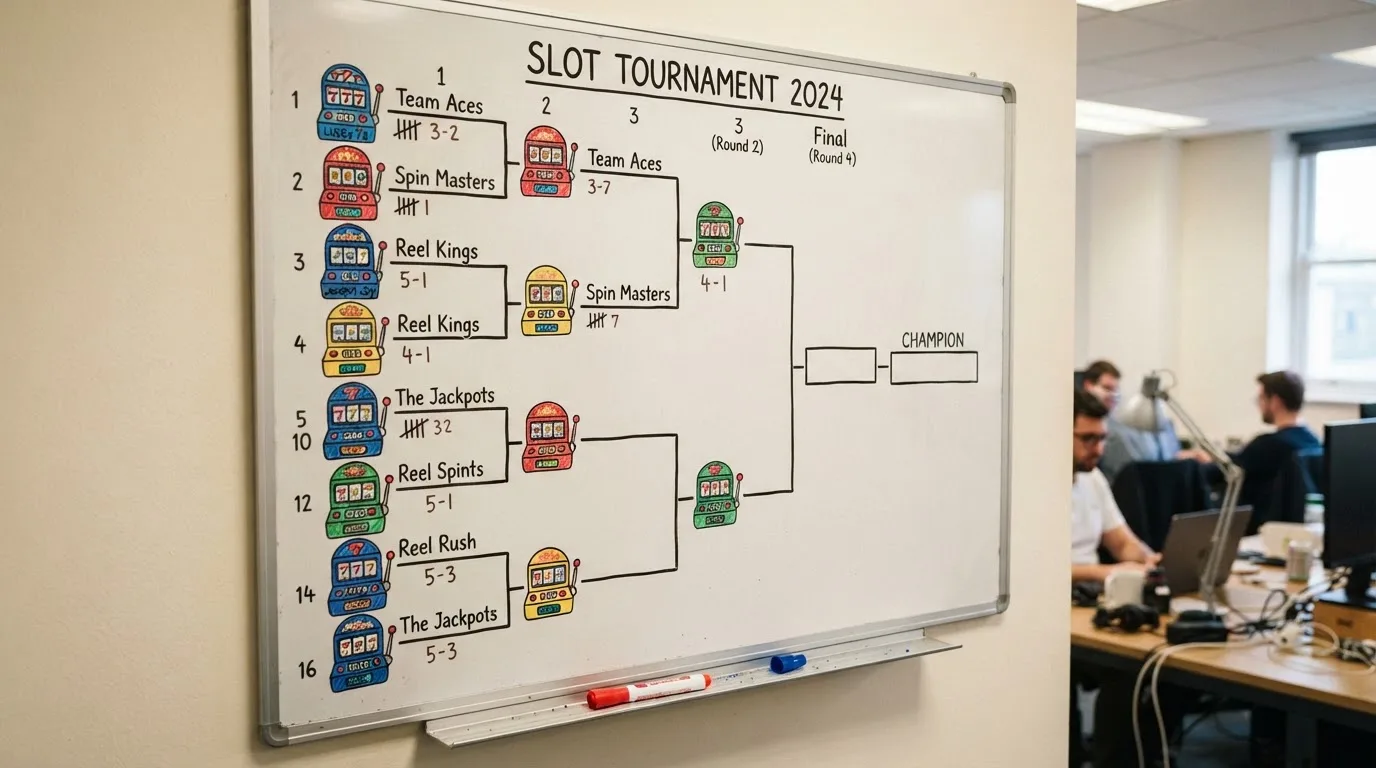
The regulator treats this as foreseeable. Every GB-licensed site must offer time-outs (24 hours up to six weeks) and full self-exclusion through GAMSTOP, the national online scheme with periods of six months, one year or five years that cannot be cancelled early. The same licence conditions require a reality check at intervals during play — a pop-up showing session length and net position — and, since 28 February 2025, a financial vulnerability check at £150 net deposits inside a rolling 30-day window. None of that removes the pull of the leaderboard. What it does is put a mechanism in front of the player: a pause, a limit, a self-exclusion, a referral route to the National Gambling Helpline run by GamCare.
What a sensible pre-entry routine looks like
Three things are worth doing before clicking Enter. Set a session time and stop when it hits, regardless of where the leaderboard sits. Set a spend ceiling that is independent of any prize the tournament advertises — because the prize is in the casino’s accounting, not in the player’s pocket until it lands and clears wagering. Decide in advance what happens if the player falls outside the prize band with ten minutes left: walk away, or ride it out. A pre-committed rule beats an in-the-moment choice every time.

Crypto deposits and tournament entry
How crypto fits into a tournament-eligible deposit
Cryptocurrency deposits land at an operator like any other payment — once the operator has converted them into a sterling balance, the tournament rules treat them no differently from a debit-card top-up. The wagering requirement that may sit on a tournament prize is counted in pounds, not in coin. Where crypto changes the picture is upstream: speed of settlement, the absence of a card-network intermediary, and the verification status of the player.
The verification point most crypto-curious players miss
A UK Gambling Commission licence carries one non-negotiable condition: name, address and date of birth must be verified before the first deposit or any play, a rule in force since 7 May 2019. That check applies whether the deposit is a bank transfer, a debit card or a coin transfer from an exchange. A crypto deposit does not exempt a player from it, and no licensed operator skips it. This is where the promise of anonymity in a crypto deposit usually breaks against the British regulatory frame: the coin can move quickly and privately, but the casino cannot let it move without confirming who is on the other end.
Practical entry path
For a player who holds coins rather than card-funded balances, the realistic sequence is: convert or transfer funds into the casino’s accepted payment route, complete the standard verification, then opt into the tournament from the casino’s promotions page. The crypto leg is a funding method; the tournament conditions are the same as everyone else’s.
Payments and how quickly prize money arrives
Where tournament winnings actually land
Prizes are paid into the player’s casino account balance, not directly to an external wallet. From there they sit under the same conditions as any other bonus-derived credit — a wagering requirement (capped at 10x since 19 December 2025) before they become withdrawable cash. Withdrawal speed depends on the method the player uses to take the money out, not on the tournament itself.
The payment-method mix at a licensed site
A Gambling Commission-licensed operator accepts debit cards and bank transfers. Credit cards have been banned for gambling since 14 April 2020, including credit cards routed through e-wallets. UK bank transfers typically run through the Faster Payments Service, launched in 2008 and operated by Pay.UK; most arrive instantly or within minutes, though transfers can take up to two hours, and individual banks can impose their own per-transaction limits well below the scheme’s £1,000,000 ceiling. E-wallets such as AstroPay (founded 2009, headquartered in Uruguay, with UK entity Larstal Limited authorised by the Financial Conduct Authority as an electronic money institution) and Apple Pay (launched 2014 in the US, supporting UK cards from 14 July 2015) are common alternatives.
What the no-deposit label really gives a player
A no-deposit tournament entry is a free ride into the leaderboard format. The casino funds the spins or the entry fee, and the prize pool still pays out. What the label does not cover is the wagering requirement on any winnings, the max-cashout cap the casino may apply, and the eligibility window — often narrow, sometimes only a few hours. Read the terms: a “free entry” can come with a £50 max withdrawal on the resulting credit, a 10x wagering turnover, and a 72-hour claim window. None of those disqualifies the offer; they just set what it is actually worth.
Apple Pay specifics worth knowing
Apple Pay protects card data through tokenization: the actual card number is replaced by a device-specific tokenised Device Primary Account Number, with a dynamic security code generated per transaction. In-store payments use near-field communication, and on an iPhone with Face ID the purchase is authenticated by a double-click of the side button. Apple Pay is not available in all markets, and a supported card from a participating issuer is required. None of that changes how a tournament prize pays out — the casino pays the player’s account, and the player chooses how to withdraw it.
Bonus mechanics and free-spin prizes
What a tournament “prize” looks like once awarded
Tournament prizes arrive as one of three things: cash credited to the withdrawable balance, bonus funds that carry a wagering requirement, or free spins on a specified slot at a specified stake. The first is the cleanest: what is in the account can be withdrawn. The second and third need a player to read what the casino has attached.
The 10x wagering cap and what it bounds
Since 19 December 2025, wagering requirements on bonuses at UK-licensed sites are capped at 10x. That ceiling bounds the multiplication that the marketing can attach to a tournament prize. A £20 bonus credited from a tournament carries a turnover requirement of at most £200 before it becomes withdrawable — a defined, finite amount rather than the 30x or 40x that older offshore offers carried.
Mixed-product bonuses are out
The same December 2025 rule package banned mixed-product bonuses: offers that tie a sports bet to a casino spin bundle, for example, are no longer permitted at GB-licensed sites. Tournament prizes that include free spins must be tied to a casino product alone, and the wagering requirement on any bonus leg must respect the 10x ceiling. That narrows the structure of promotional tournaments, but it also flattens the worst-case requirement.
The slot stake ceiling that governs every spin in the tournament
Online slots in Great Britain carry a maximum stake per game cycle — £5 for players aged 25 and over (from 9 April 2025) and £2 for players aged 18 to 24 (from 21 May 2025). These ceilings apply to every spin inside a tournament as much as they apply to ordinary play. A “high-roller tournament” with £20-per-spin stakes is not a product a GB-licensed casino can run for British players. The ceiling also caps the wagering turnover a player can build against a bonus in a fixed time: the highest-spin player in the field is spinning at £5 per game cycle, and the game cycle itself may not run faster than 2.5 seconds, with auto-play banned since 31 October 2021.
What a £20 bonus actually costs to clear
The wagering-turnover band is the arithmetic that tells a player how long clearing a tournament-derived bonus takes, under the assumptions a player can actually control. The formula is straightforward: required turnover equals the bonus multiplied by the wagering factor, and the number of spins is that turnover divided by the stake per spin. The 10x cap sets the upper bound on the wagering factor, and the £5 stake ceiling sets the ceiling on the stake per spin.
Take a £20 tournament prize credited as bonus funds with a 10x wagering requirement. Required turnover is £20 × 10 = £200. At the £5 maximum stake, that is 200 ÷ 5 = 40 spins. At a 2.5-second game cycle, 40 spins run for 40 × 2.5 = 100 seconds of reel time. The £2 stake ceiling for 18-24 players stretches the same clearing to 100 spins and 250 seconds, still well under five minutes of pure spinning. The wagering cap changes the shape of the band: a 30x offshore requirement on the same £20 prize would multiply the spins to 120 at the £5 ceiling and the time to 300 seconds.
A player who reads the wagering factor on the prize terms first has the entire picture in two numbers. A player who reads the marketing first has to come back to those two numbers anyway.
Games, providers and what shows up on leaderboards
The slot titles that recur on UK tournament leaderboards
Tournaments tend to run on titles with high hit frequency and visible bonus rounds — slots where the score can move quickly, because every spin counts and a long quiet stretch costs the player places. Providers that supply these games to GB-licensed operators include the usual mix of studios whose content has passed the Commission’s Remote Technical Standards. Tournaments are a marketing surface, so the slots chosen are the ones players recognise: progressive-jackpot network titles, branded releases, and high-volatility games whose bonus rounds deliver a single large score event that lifts a player several places at once.
Why the format suits some slots more than others
A leaderboard race measures aggregate over a window, not single-spin luck. That tilts the format toward slots with a steady drip of small wins — a player who picks up a base-game hit every few spins stays in touch with the leaderboard even without landing the bonus. High-volatility slots can flip a position in one round, but they also have the dry spells that drop a player out of the prize band entirely. Neither is wrong; they are different tournament strategies for different slots.
Live tables and tournaments
Live-dealer tournaments exist but are rarer than slot tournaments. They typically run as timed blackjack or roulette windows where the highest chip count at the end wins. The same stake ceilings and game-cycle rules apply. A live tournament session is harder to leave mid-window — the camera is rolling, the bets are placed — and the time commitment tends to be longer than a slot race.
Strategy as a constraint, not a tip sheet
Slot tournament strategy is a constrained problem. The reel results are independent; no choice on the player’s part changes the underlying RTP of the slot. What a player can control is spin frequency (within the 2.5-second game-cycle minimum), stake size (within the £5 / £2 ceiling) and session length. Beyond those, “strategy” in a slot tournament is shorthand for pacing. Pick a stake, hold it, ride out the window. A player who chases positions by raising the stake runs into the ceiling, and a player who chases by spinning faster runs into the game-cycle minimum.
UK-licensed online casinos running slot tournaments
The licensed set
Ten operators appear on the list that follows. Every one of them holds a current Gambling Commission remote casino operating licence and runs tournaments for British players. Several share a single licence account — Ladbrokes, Coral and Gala Bingo all sit under LC International Limited, which means the three brands are not independent operators in the regulatory sense, even if they run separate front-end products. The list is ordered as research presents it; it is not a ranking of which casino pays out fastest or runs the best tournament, and reading it that way is the wrong use of it.
| Brand | Licence holder (GB remote casino licence) | Domain status on the register | Subject support |
|---|---|---|---|
| Paddy Power | PPB Games Limited, 039411-R-319335-010 | Active on the register | — |
| Ladbrokes | LC International Limited, 054743-R-330863-014 | Active on the register | — |
| MrQ | Tek Fox Ltd, 060629-R-337532-004 | Active on the register | — |
| Coral | LC International Limited, 054743-R-330863-014 | Active on the register | — |
| bet365 | Hillside (UK Gaming) ENC, 055149-R-331499-004 | Active on the register | — |
| Betfred | Petfre (Gibraltar) Limited, 039544-R-319290-010 | Active on the register | — |
| Casumo | Recro Limited, 061549-R-336718-002 | Active on the register | — |
| 888casino | 888 UK Limited, 039028-R-319297-014 | Active on the register | — |
| Jackpotjoy | Gamesys Operations Limited, 038905-R-319430-022 | Active on the register | — |
| Gala Bingo | LC International Limited, 054743-R-330863-014 | Active on the register | — |
A licence number on the Gambling Commission’s register follows the shape account-R-number-suffix, where the leading six digits repeat the licence holder’s account number and the “R” marks a remote (online) licence. That format is what a player should see on the regulator’s record, not a generic “fully licensed” line on the casino’s own footer.
What the register says about the wider market
On 18 September 2026 the Gambling Commission’s public register listed 139 businesses holding an active remote casino operating licence. The register’s domain list is larger: 1065 active domains and 361 white-label domains. A white-label site trades under another company’s licence — the front-end brand is owned by a marketing company, and the actual operating licence sits with a third party. That distinction matters when something goes wrong: a complaint routes to the licence holder, not the brand on the homepage.
The verification and GAMSTOP layer that runs across the set
Every operator on the list is bound by the same identity-verification rule (name, address, date of birth, since 7 May 2019), the same GAMSTOP integration (mandatory since 31 March 2020), and the same affordability-check framework (£150 net deposits in a rolling 30 days, from 28 February 2025). For a player, this means the experience at one of these brands is closer to the experience at another than the marketing suggests. The differentiation is in product, not in the regulatory floor.
Paddy Power
PPB Games Limited holds the remote casino operating licence 039411-R-319335-010, with Paddy Power listed as an active domain on the register. Paddy Power’s tournament schedule runs alongside its sportsbook promotions, and its prize structures tend to mirror the bookmaker’s broader promotional cadence. For a player who already has a Paddy Power account, the tournament entry path is short — the brand runs on an existing wallet and existing verification. For a player who doesn’t, the registration friction is the same as any other licensed operator on the list: identity check first, deposit second, tournament opt-in third.
Ladbrokes
LC International Limited holds the licence 054743-R-330863-014 that also covers Coral and Gala Bingo. Ladbrokes’ casino product runs tournaments as part of a broader promotional schedule that includes sportsbook-linked offers elsewhere on the site. The tournament terms are casino-only, in line with the December 2025 rule that banned mixed-product bonuses. A player on Ladbrokes’ casino is playing under a licence shared with two other listed brands — which is not a complaint route problem, because the licence holder is the same legal entity across all three.
MrQ
Tek Fox Ltd holds the licence 060629-R-337532-004, with Mrq.com listed as an active domain. MrQ is positioned as a slots-first brand, and its tournament calendar tends to lean into slot-specific formats. The brand’s smaller marketing footprint compared to the sportsbook-led names above is not a signal about licence quality — the licence is current on the register, and the verification and player-protection obligations are identical.
Coral
Coral sits under the same LC International Limited licence as Ladbrokes and Gala Bingo — 054743-R-330863-014 — with coral.co.uk listed on the register. The casino product carries its own tournament schedule, separate from the sportsbook promotions on the same domain. A player who already uses Coral for sports does not need a second verification to access the casino tournament; the licence account covers both products.
bet365
Hillside (UK Gaming) ENC holds the licence 055149-R-331499-004, with Bet365.com listed on the register. bet365’s tournament offering sits inside one of the largest product catalogues on the licensed list. The trade-off is volume: a player can find a tournament running at almost any hour, but the prize pools tend to be spread across more concurrent events. The verification, GAMSTOP and affordability-check framework is unchanged.
Betfred
Petfre (Gibraltar) Limited holds the licence 039544-R-319290-010, with Betfred.com listed on the register. Betfred’s casino product runs tournaments with a similar structure to its sportsbook promotions, and the prize formats favour cash-credited awards over bonus-fund credits where the terms allow. The Gibraltar operating company is a long-standing arrangement and does not affect the player’s protection under the GB licence.
Casumo
Recro Limited holds the licence 061549-R-336718-002, with Casumo.com listed on the register. Casumo’s product is casino-only — there is no sportsbook on the same account — and its tournament schedule leans into longer-format races. The brand’s gamified progression sits outside the tournament leaderboard, so a player encounters the leaderboard format as a separate event rather than a feature of the main account journey.
888casino
888 UK Limited holds the licence 039028-R-319297-014, with 888casino listed on the register. 888casino’s tournament offering includes both slot and live-dealer windows. The licence is among the longer-standing entries on the register, and the operator’s product range is wide enough that tournament scheduling varies in cadence across the year.
Jackpotjoy
Gamesys Operations Limited holds the licence 038905-R-319430-022, with Jackpotjoy.com listed on the register. Jackpotjoy’s product is bingo-led, and the slot tournament calendar is shorter than the bingo schedule — a player who picks this brand for tournaments specifically is picking it for the slot events it does run, not for daily slot tournaments as a default.
Gala Bingo
Gala Bingo sits under LC International Limited’s licence 054743-R-330863-014, with Gala Bingo listed on the register. Like Jackpotjoy, the brand’s main product is bingo, with slot tournaments running as a secondary schedule. A player who wants slot tournaments as the main event will find a denser schedule at the brands above whose primary product is casino.
How the British market regulates slot tournaments
The licence is the entry ticket
A slot tournament for British players is only legal if the operator holds a Gambling Commission remote casino operating licence. Section 33 of the Gambling Act 2005 makes it an offence to provide gambling to people in Great Britain without one, and the Gambling (Licensing and Advertising) Act 2014 closed the previous loophole that allowed operators based overseas to serve British customers on a home-country licence. A Curaçao, Maltese or Gibraltar licence is not a substitute for a Commission licence. The Commission’s public register is the test of whether a brand holds one; the licence number has the form described above, and the domain is listed against the licence account.
The Commission can disrupt, not block
The Commission can issue cease-and-desist notices, refer illegal sites for search-engine delisting, and route payment and hosting providers toward compliance — but it has no ISP-blocking power. A player who lands on an unlicensed site has no GAMSTOP coverage, no approved alternative dispute resolution route, and no Commission complaints procedure. The penalty falls on the operator; what the player loses is the protection layer that sits around a GB-licensed site.
The full regulatory frame around a single spin
A single spin in a GB-licensed slot tournament is governed by: the stake ceiling (£5 at 25+, £2 at 18-24), the 2.5-second minimum game cycle, the auto-play ban, the loss-disguised-as-win ban, the reality-check pop-ups, and the affordability-check trigger at £150 net deposits in 30 days. None of these is a tournament-specific rule; all of them apply to every spin a British player makes at a licensed site, whether it scores points on a leaderboard or not.
What the player does not pay
Players pay no tax on gambling winnings in the UK. Operators pay Remote Gaming Duty, raised from 21% to 40% from 1 April 2026 — a model-side number, not something a player owes. A tournament prize paid into a player’s account is paid gross.
Putting it together: what a British slot tournament player actually decides
The three questions that matter before entering
Is the operator licensed? The Commission’s register settles that, and the licence number on the casino’s footer should match a record on the register. Is the wagering requirement on any prize within the 10x cap? If the terms show a higher multiple, the casino is either offshore or non-compliant — both are reasons to walk away. Is the entry path compatible with the stake ceiling and the verification the player has already completed? If yes, the tournament is the same product it is for every other British player on the licensed list.
What to do with the no-deposit label
Treat it as a free entry with conditions. Read the wagering factor, read the max-cashout cap, read the claim window. A no-deposit tournament that pays cash with no turnover is the cleanest version of the offer; a no-deposit tournament that pays bonus credit at 10x with a £50 max withdrawal is a smaller thing than the marketing suggests.
What to do with the leaderboard pull
Set the time limit before entering. Set the spend ceiling before entering. Decide the exit rule before entering. The leaderboard will do what leaderboards do — pull players toward one more spin — and the only reliable defence is a rule that was set before the pull began.
The single best reason to pick one brand over another
Product fit, not licence quality. Every brand on the licensed list clears the same regulatory floor. The differentiation is in the tournament schedule, the prize structure and the slot catalogue. A player who prefers long-format races finds them at one brand; a player who wants a new short-format race every day finds them at another. The licence is the gate; the product is the choice.
Frequently asked questions about UK slot tournaments
How do online slot tournaments work at UK casinos?
A slot tournament is a timed race on a specified slot, with everyone playing the same game over the same window. The casino tallies a score — usually total winnings, sometimes a points formula — and the top names on the leaderboard share the prize pool. Entry can be free, deposit-based or buy-in. The slot itself is a normal Gambling Commission-licensed game; the tournament format is a promotional layer on top.
Can I enter a slot tournament without making a deposit?
Yes. No-deposit tournaments are a standard promotional format at GB-licensed operators, and they typically credit the entry fee or the spins to the player’s account directly. The prize often arrives as bonus funds rather than cash, carries a wagering requirement capped at 10x, and may be subject to a max-cashout cap and a claim window. Read those three terms before entering.
What determines my ranking on a tournament leaderboard?
Most slot tournaments rank by aggregate winnings across all spins in the window. A few use a points formula — one point per spin, ten points per bonus trigger, and so on. The exact formula is in the tournament terms; the slot’s RTP and the player’s stake size (within the £5 / £2 ceiling) set the realistic range. No choice on the player’s part changes the underlying RTP of the slot.
How quickly are tournament prizes paid out?
Tournament prizes are credited to the player’s casino account, usually within minutes of the leaderboard being finalised. From there, withdrawal speed depends on the payment method: UK bank transfers via Faster Payments typically arrive within minutes, e-wallets vary, and debit card withdrawals depend on the card issuer. The wagering requirement on any bonus credit must be cleared before the balance is withdrawable.
Do crypto deposits count towards tournament entry the same as card payments?
Once a crypto deposit is converted into the casino’s sterling balance, the tournament rules treat it the same as any other funding method. The wagering requirement is counted in pounds. The catch is verification: a UK Gambling Commission licence requires name, address and date of birth to be confirmed before the first deposit or any play, regardless of how the deposit arrives. A crypto deposit does not exempt a player from that check.