Casino VIP Programmes in the UK: What Actually Changes Once You Reach the Top Tier
Data current as of 7 November 2026 and verified against the Gambling Commission’s public register of gambling businesses. A VIP tier at a UK-licensed casino promises a different relationship with the operator — a personal host, a swifter review queue, a tailored gift list, sometimes a higher withdrawal ceiling. What it does not promise is freedom from the rules that apply to every other account. The £5 slot stake cap, the 10x wagering requirement ceiling, the GAMSTOP self-exclusion regime, the credit-card ban, the deposit-limit prompt before the first deposit — each of these sits on the licence, not on the tier, and the operator cannot trade it away for any player’s status.
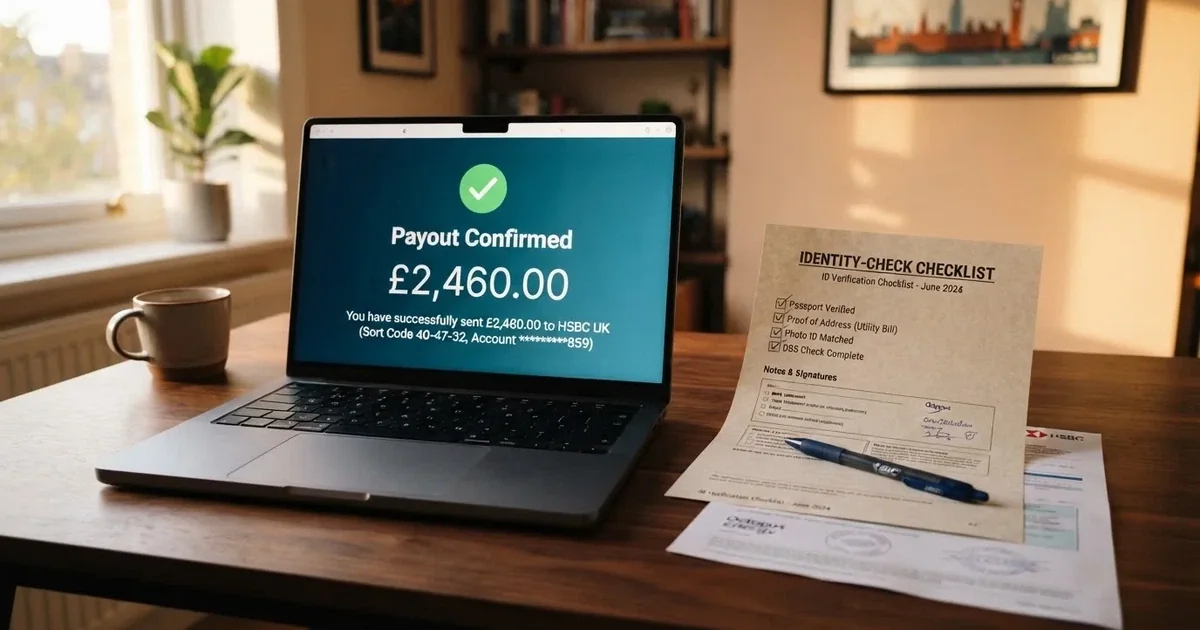
This page walks through what a high-roller programme actually delivers at a licensed British casino in 2026, where it bumps into the regulatory ceiling, and which numbers on the marketing page will and will not move once a player reaches the top tier. The account-manager line, the gifts, the events, the faster-queue promise are real; the implicit suggestion that a VIP tier exempts its members from the Gambling Commission’s safer-gambling floor is not. Anyone comparing offers needs both halves to be on the table, because the second half is the one that costs money when it goes wrong.
Table of Contents
- Payments, rails, and the queue that is supposed to move faster
- Bonuses, free spins, and the 10x ceiling that hits every tier
- The ten-licensee landscape at the Gambling Commission register
- The fundamentals every VIP tier sits on top of
- Legality, licensing, and the offshore gap
- Responsible gaming at the top tier
- Crypto, anonymity, and what a VIP tier does not change
- The arithmetic on a high-roller bonus under the 10x cap
- Coral — the LC International flagship and the tier inside one licence holder
- BetVictor — a single-brand operator with a long history
- Virgin Games — a white-label front inside the Gamesys framework
- Ladbrokes — the high-street brand on LC International’s licence
- Jackpotjoy — the Gamesys flagship on a directly held licence
- PokerStars — the Stars Interactive casino alongside the poker room
- Gala Bingo — the LC International bingo brand with a casino front
- William Hill — the WHG (International) high-street brand
- Grosvenor Casinos — the Rank Interactive land-based and online pairing
- Midnite — the Dribble Media newer-entrant operator
- Picking a programme without picking a fight with the regulator
- Frequently asked questions
Payments, rails, and the queue that is supposed to move faster
A licensed UK casino processes deposits and withdrawals through a small set of payment rails, and the rail is the same whether the account sits at entry level or at the top of a loyalty tier. The processing queue — the part of the journey that sits between “you asked for the money” and “the money is in your bank” — is where a VIP account is supposed to see a difference, and the difference is real but bounded.

The rails themselves are not tier-dependent
Debit cards, bank transfers routed through the Faster Payments Service, Apple Pay, AstroPay, and a handful of regulated e-wallets handle most deposits and withdrawals at a UK-licensed casino. Faster Payments, the bank-to-bank rail operated by Pay.UK since 2008, runs continuously and most transfers settle instantly or within a few minutes, with the scheme cap set at £1,000,000 per transaction — though individual banks impose their own lower ceilings. Apple Pay, developed by Apple Inc. and launched on 20 October 2014, began supporting UK-issued cards on 14 July 2015; it tokenises card data through a device-specific Device Primary Account Number and uses near-field communication at the till, and it works the same way at a £10 deposit and at a £10,000 deposit. AstroPay, founded in 2009 and headquartered in Uruguay, operates through a UK entity called Larstal Limited — an electronic money institution authorised by the Financial Conduct Authority under the Electronic Money Regulations 2011 — and supports users in the United Kingdom along with Argentina, Australia, Brazil, Canada, Colombia, Denmark, Spain, the United States and Uruguay.
The practical effect of this for a player is that the deposit ceiling and the deposit friction do not change as the loyalty tier rises. Apple Pay will still ask for a Face ID double-click on iPhone with Face ID, or a Touch ID double-click on iPhone with Touch ID; the bank will still apply its own Faster Payments ceiling; the e-money institution will still run its own onboarding checks. The rail is the same one a brand-new account uses.
Credit cards are not a rail, at any tier
Since 14 April 2020 the Gambling Commission has banned credit cards for gambling across every online and offline product in Great Britain, with the narrow exception of non-remote lotteries paid for face-to-face. The ban reaches credit-card-funded e-wallet deposits as well — a workaround via PayPal or Skrill does not reopen the credit-card route. The Commission reached its decision in part on data showing that around 800,000 UK consumers used credit cards to gamble in 2018, and that 22 per cent of online gamblers using credit cards were classed as problem gamblers. A VIP tier does not re-legalise the credit-card route; no tier does, because the prohibition sits on the operator’s licence condition, not on the player’s account status.
What the queue promise is and is not
A licensed casino’s marketing for a top-tier account often names faster withdrawal processing as a perk, and the description is partly accurate. Once the operator’s standard identity verification and source-of-funds checks have been completed, a higher-tier account is sometimes routed through a more responsive review queue — a smaller backlog, a named approver, a higher-priority workflow — so that the operator-side delay between request and approval can shrink. The underlying payment rail is still Faster Payments for a bank transfer, still a card-scheme push for a debit card, still an e-money institution payout for a wallet — and those rails carry their own clearing time, which the operator cannot shorten by tagging an account as VIP.
Two consequences follow. First, the visible withdrawal time at a VIP account reflects a smaller operator-side queue plus the unchanged rail; it does not reflect a new rail. Second, the source-of-funds check that gates a withdrawal is the same check that gates every other withdrawal at the same operator, and it can still trigger an additional review at any withdrawal size, at any tier. A player expecting a VIP tier to bypass the source-of-funds review will be disappointed.
Payment Rails Overview
| Rail | Speed | Typical Limit |
|---|---|---|
| Debit Card | Instant | Operator specific |
| Faster Payments | Instant/Minutes | £1,000,000 |
| Apple Pay | Instant | £10,000+ |
| AstroPay | Instant | Varies |
| Bank Transfer | Minutes/Hours | Bank specific |
The headline number that genuinely can rise with a VIP tier is the per-transaction or per-day withdrawal ceiling. A standard account at a UK-licensed casino might cap withdrawals at a few thousand pounds per day, with a longer ceiling per week or month; a top-tier account can sit at a much higher single-transaction limit, sometimes in the tens of thousands. This is the one figure on the withdrawals page that the operator can actually move without breaching its licence conditions, and it is the one a high-volume player should look at first.
The ceiling sits inside a wider set of rules. The operator must still run affordability and source-of-funds checks at any withdrawal size where the data warrants it — the new financial vulnerability checks, which run from 28 February 2025 at £150 net deposits in a rolling 30 days using public data only, sit alongside the existing affordability framework. A higher ceiling does not exempt an account from those checks; it just lets the player request a larger single payout without bumping into a per-transaction wall.
Bonuses, free spins, and the 10x ceiling that hits every tier
The marketing line on a high-roller programme frequently bundles a deposit bonus, a free-spin allocation, and a cashback component, all of them framed as exclusive to the top tier. The framing is partly accurate; the rules those offers sit under are not exclusive, and they constrain the headline numbers sharply.
The 10x wagering cap applies to every tier
Since 19 December 2025 the Gambling Commission has capped wagering requirements at 10x the bonus amount for any offer at a UK-licensed casino. The cap covers deposit bonuses, free-spin winnings that carry a wagering requirement, and any incentive structure that takes the player’s money in and gives a benefit out. It does not exempt VIP tiers, and it does not exempt “exclusive” offers. A 200 per cent deposit match with a 35x wagering multiple is not legal at a licensed site in 2026; a 100 per cent deposit match with a 10x wagering multiple is. The multiple sits on the licence condition, not on the player’s account status.
This is the one rule that resets the arithmetic on a high-roller bonus. A £500 bonus with a 10x wagering requirement means £5,000 of qualifying turnover before the bonus and any associated winnings become withdrawable. At a £5 slot stake — the maximum for a player aged 25 and over since 9 April 2025, and £2 for a player aged 18 to 24 since 21 May 2025 — that is 1,000 spins, each at the regulatory maximum. At a £2 stake, it is 2,500 spins.
Mixed-product bonuses are out
The same 19 December 2025 package banned mixed-product bonuses — a stake on sport in return for casino spins, a casino deposit in return for sports free bets, any structure that crosses product lines to pull spend across. A loyalty tier that once used a sports-casino cross as a perk cannot use it now. The bonus structure is narrower than it was, at every tier.
The free-spin frame
Free spins attached to a deposit, to a new-game launch, or to a tier upgrade must carry a wagering requirement no higher than 10x the bonus amount, and the £5 / £2 stake cap means each spin is bounded regardless of the offer’s generosity. A “100 free spins” headline at a top tier means 100 spins at the regulated stake, with any winnings routed through the 10x requirement. The headline number is generous; the realised cash value is constrained by both the stake cap and the wagering ceiling.
The cashback question
Cashback offers at a licensed casino — a percentage of net losses returned as bonus funds — sit under the same 10x wagering ceiling when the operator frames them as a bonus. A “10 per cent cashback, 5x wagering” structure is compliant; a “20 per cent cashback, no wagering” structure on bonus funds is harder to fit inside the rules, and a “cashback paid as cash” structure moves the offer out of the bonus regime entirely. The tier changes the percentage; the regime does not.
The loyalty-point and tier-bonus frame
A loyalty scheme that pays points on real-money play and converts those points to bonus funds follows the 10x rule on the conversion, just as a deposit bonus does. A scheme that pays points and converts them to cash — withdrawable funds, no wagering — sits outside the bonus regime and is not constrained by the 10x cap, though the operator’s own conversion rate governs what the points are actually worth. The headline “1 point per £10 wagered” can sound generous until the cash-conversion rate is read.
The ten-licensee landscape at the Gambling Commission register
The Gambling Commission’s public register is the test of whether a brand holds a licence in Great Britain, and on 18 September 2026 it listed 139 businesses holding an active remote casino operating licence, with the full register downloadable as CSV or Excel for anyone who wants to check. The register’s domain list records each website against the licence account that runs it, with a status of Active, Inactive or White Label — a white-label site trades under another company’s licence, which means its player-protection framework is the licence-holder’s, not the brand’s. On 18 September 2026 the domain list held 1065 active and 361 white-label domain entries; the gap between 139 licence holders and 1,426 listed domains is the white-label arrangement working at scale.
A licence number on the register follows the form (account)-R-(number)-(suffix), where the leading six digits repeat the licence holder’s account number and the “R” marks a remote, or online, licence. The remote casino operating licence is the specific licence type that covers online casino play; a remote betting licence covers sports betting and a remote bingo licence covers bingo, and an operator can hold any combination of the three.
The following table sets out the ten featured brands, their licence holder, the licence number, and the domain status on the register on 18 September 2026. Several brands share a single licence holder — Ladbrokes, Coral and Gala Bingo sit under LC International Limited, for example — and a player comparing offers across them is comparing offers inside one licence-holder’s portfolio, not across independent operators. Every brand listed below is GB-licensed and therefore a mandatory participant in GAMSTOP.
| Brand | Licence holder and GB remote casino licence | Domain status on the register |
|---|---|---|
| Coral | LC International Limited — 054743-R-330863-014 | Active |
| BetVictor | BV Gaming Limited — 039576-R-319370-028 | Active |
| Virgin Games | Gamesys Operations Limited — 038905-R-319430-022 | White Label |
| Ladbrokes | LC International Limited — 054743-R-330863-014 | Active |
| Jackpotjoy | Gamesys Operations Limited — 038905-R-319430-022 | Active |
| PokerStars | Stars Interactive Limited — 039108-R-319334-026 | Active |
| Gala Bingo | LC International Limited — 054743-R-330863-014 | Active |
| William Hill | WHG (International) Limited — 039225-R-319373-015 | Active |
| Grosvenor Casinos | Rank Interactive (Gibraltar) Limited — 057924-R-334666-005 | Active |
| Midnite | Dribble Media Limited — 042647-R-321653-022 | Active |
What the register does not carry is a VIP-programme description, a loyalty-tier table, or a comparison of host services across operators. Those live on the operator’s own pages, which is why the rest of this page reads them rather than the register.
The fundamentals every VIP tier sits on top of
A licensed UK casino runs the same fundamentals underneath every tier — and a player choosing between tiers, or between operators at the same tier, needs to know what those fundamentals are because none of them relax as the loyalty status rises.

Identity, age, and source of funds
Since 7 May 2019 every customer at a UK-licensed casino has had name, address and date of birth verified before the first deposit or any play. The minimum age is 18. The verification uses document checks and database lookups; a personal account manager at a top tier does not replace them. The manager sits alongside the verification, not in place of it, which is why a higher-tier account is not faster to open and is not exempt from the source-of-funds review when it requests a large withdrawal.
The deposit-limit prompt
From 31 October 2025 a licensed operator must prompt a customer to set a financial limit before the first deposit. The prompt cannot be skipped, and a player who closes it without setting a limit is asked again at intervals the operator sets. A VIP tier does not move this prompt off the path; it sits before the first deposit of every new account, regardless of whether the operator expects that account to become a top-tier one.
Reality checks, time-outs, and self-exclusion
Reality checks — pop-up messages that summarise session time and net position at set intervals — are a Commission-mandated feature of every licensed casino. Auto-play has been banned since 31 October 2021, and a slot spin cannot be faster than 2.5 seconds. Losses disguised as wins — a slot outcome that plays a celebratory animation for a net loss — are also banned. Time-out (a short break from play) and self-exclusion (a longer block) are available at every tier. A player who has self-excluded through GAMSTOP cannot reopen an account at a different licensed casino for the duration of the exclusion; the operator is bound by the GAMSTOP match before letting the customer deposit.
The financial vulnerability check
From 28 February 2025 a licensed casino must run a financial vulnerability check at £150 net deposits in a rolling 30-day window, using publicly available data only. The check is automatic; the operator cannot skip it for a higher-tier account. The wider financial risk assessments — a fuller affordability framework using customer-provided data — have been announced but are not yet in force as of the data snapshot this page works from. When the wider framework lands, it will apply at every tier.
Remote Gaming Duty
The operator pays Remote Gaming Duty on its gross gaming yield. From 1 April 2026 the rate rises from 21 per cent to 40 per cent. Players pay no tax on gambling winnings in the UK; the duty is the operator’s, not the player’s, and the rate change affects the operator’s economics rather than a customer’s withdrawal. A player does not see Remote Gaming Duty on a withdrawal receipt, and a VIP programme does not change it.
Legality, licensing, and the offshore gap
The Gambling Commission is the regulator for Great Britain, sponsored by the Department for Culture, Media and Sport, and operating under the Gambling Act 2005. Great Britain in the Act means England, Scotland and Wales; Northern Ireland has its own regulatory framework. The Gambling (Licensing and Advertising) Act 2014 closed the previous arrangement under which an offshore operator could take British customers on a home-country licence: any operator taking customers in Great Britain now needs a Commission licence, regardless of where it is based. A Curaçao, Maltese or Gibraltar licence is not a substitute, and an operator holding only an offshore licence is operating illegally in Great Britain.
What “licensed in the UK” actually means
A Commission licence binds the operator to the Licence Conditions and Codes of Practice (LCCP), to the social responsibility code, to the Remote Technical Standards, and to the conditions attached to the specific licence type — a remote casino operating licence, in this context. The Commission’s enforcement tools include financial penalties, licence suspension, and licence revocation; a player who has a complaint against a licensed operator has access to an approved alternative dispute resolution (ADR) provider. The ADR route is not available against an unlicensed operator.
The offshore protection gap
A player who plays on an unlicensed site — a Curaçao-licensed brand taking British customers without a Commission licence — does not lose money to the regulator, because no penalty aims at the player. What the player loses is the protection framework: no GAMSTOP match on sign-up, no ADR route for complaints, no Commission oversight of the operator’s game fairness or financial stability. The Commission’s enforcement against illegal sites is real — cease-and-desist notices, search-engine delisting referrals, payment and hosting referrals — but the Commission has no power to compel ISP-level blocking in Great Britain. The disruption tools reduce the visibility of illegal sites; they do not eliminate them, and a player who seeks them out can still find them.
How this lands for a high-roller comparison
A player comparing VIP programmes should be comparing programmes at licensed operators, because the protection framework is the test of whether the operator’s promises are enforceable. A “VIP tier with a personal host and a 24-hour withdrawal promise” at an unlicensed site is a marketing claim without an ADR backstop; the same promise at a licensed site sits inside a framework the Commission can audit. The marketing language is identical; the player’s position when the operator fails to deliver is not.
Responsible gaming at the top tier
A higher balance or a higher tracked-activity figure does not exempt an account from the responsible-gaming floor. The same tools apply to the player who has been with the operator for ten years and reached the top tier as to the player who opened an account this morning.
Deposit limits that do not rise automatically
The deposit limit a player sets at the prompt-before-first-deposit stage, or later through the responsible-gaming page, caps the player’s own deposits. A VIP tier does not raise this cap unless the player raises it themselves, and the operator must apply a cooling-off period to any increase. A player who wants a higher ceiling to chase losses cannot get one by contacting the host.
Reality checks and time-outs that cannot be silenced
A higher-tier account sees the same reality-check pop-up at the same intervals as every other account at the operator. The player can choose the interval at sign-up or later, but the operator’s default — usually 30 minutes or 60 minutes — applies until the player changes it. A time-out (a short break from play, typically 24 hours to six weeks) and a self-exclusion (six months, one year or five years through GAMSTOP) are available at every tier.
GAMSTOP is mandatory
GAMSTOP is a mandatory condition of every online operating licence in Great Britain since 31 March 2020. The scheme lets a player self-exclude across every licensed operator for six months, one year or five years; the exclusion cannot be cancelled early. The licensed operator must check the GAMSTOP database before letting a customer deposit, and the check runs regardless of the customer’s tier. A player who has self-excluded through GAMSTOP cannot reopen a higher-tier account at any licensed operator for the duration of the exclusion; the database match is the test, not the brand.
GamCare and GambleAware
The National Gambling Helpline, run by GamCare, and the work funded by GambleAware sit alongside the operator’s own safer-gambling tools. The operator must signpost both on the responsible-gaming page; a VIP host cannot replace the signpost. A player in distress has the same routes to help at every tier.
The host as a safer-gambling intervention, not a workaround
A dedicated VIP account manager is sometimes framed as a workaround for the safer-gambling floor, on the implicit reasoning that a personal relationship with the operator lets the player negotiate around limits. The frame is wrong on the operator’s side: a host cannot override a GAMSTOP match, cannot silence a reality check, and cannot raise a player-set deposit limit on the player’s behalf. The host’s role is to support the customer’s chosen responsible-gaming settings, not to undo them.
Crypto, anonymity, and what a VIP tier does not change
The cryptocurrency angle on a VIP programme is the angle that pushes hardest against the UK regulatory frame, because the Commission’s safer-gambling regime assumes an identified customer and a regulated payment rail.
Anonymous play is not possible at a licensed site
Since 7 May 2019 every customer has had name, address and date of birth verified before the first deposit or any play. The verification sits before the loyalty tier; it does not run alongside the tier, and the host at a top tier cannot bypass it. A player who wants to play at a licensed site accepts the identity check as a precondition; a player who refuses the check cannot reach the tier in the first place.
Crypto deposits at a UK-licensed casino
A UK-licensed casino that accepts crypto deposits does so under the same licence conditions that apply to every other deposit method: the customer is verified before the first deposit, the deposit is screened against the source-of-funds framework, and the withdrawal flows back through a regulated rail. The crypto angle at a licensed operator is mostly about the deposit and withdrawal rails, not about anonymity — the licensed operator’s KYC and AML framework still runs.
The crypto angle at an unlicensed site
An unlicensed crypto casino taking British customers can offer a tier that the licensed market cannot match on anonymity, because the operator is not running a UK KYC framework. The offer is real; the protection is not. A player choosing that route is choosing it knowing that there is no GAMSTOP match on sign-up, no ADR route for complaints, and no Commission oversight of the operator’s game fairness. The crypto angle is the one place where the offshore gap intersects directly with the VIP-programme question.
A personal host is not an anonymity perk
A dedicated VIP account manager is a relationship-management perk — a named contact who knows the customer’s preferences, a single channel for support requests, an escalation route for any issue. The manager is not an anonymity feature, because the customer is already identified at the KYC stage. The manager is also a single point of failure: a complaint handled by the host that does not resolve through the host still goes to the operator’s complaints team, and from there to ADR if the operator is licensed. The manager is faster, not exclusive.
The arithmetic on a high-roller bonus under the 10x cap
A £500 deposit bonus at a licensed UK casino in 2026 carries a wagering requirement capped at 10x, meaning £5,000 of qualifying turnover before the bonus funds and any associated winnings become withdrawable. The realised cost of clearing that bonus depends on the slot the player chooses and the stake per spin, both of which are bounded by the regulatory frame.
Worked example: £500 bonus, 10x wagering, £5 stake
The qualifying turnover required to clear the bonus is £5,000. At a £5 stake per spin — the maximum for a player aged 25 and over, in force since 9 April 2025 — the qualifying turnover represents 1,000 spins. Each spin must take at least 2.5 seconds (the minimum spin interval since 31 October 2021), so 1,000 spins represent 2,500 seconds of slot play, or roughly 42 minutes at the regulatory minimum. At a realistic spin pace with the reality-check pop-ups factored in, the same 1,000 spins represent a session of several hours; the 42-minute figure is the floor.
A younger player aged 18 to 24 faces a £2 stake cap, in force since 21 May 2025. The same £5,000 of qualifying turnover at a £2 stake is 2,500 spins. At the 2.5-second minimum interval, that is 6,250 seconds, or roughly 104 minutes at the floor. The stake cap doubles the time required to clear the same bonus for a player in the younger age band.
Worked example: a smaller bonus, a tighter bankroll
A £100 deposit bonus with a 10x wagering requirement is £1,000 of qualifying turnover. At a £5 stake, that is 200 spins — 500 seconds, or roughly 8 minutes at the minimum interval. At a £2 stake, that is 500 spins — 1,250 seconds, or roughly 21 minutes. The 10x ceiling has flattened the bonus side of the offer compared with the pre-2026 market; the realised time to clear depends on the stake cap, which depends on the player’s age.
The wagering requirement as a band, not a point
The Gambling Commission’s 10x cap is a ceiling, not a floor. A licensed operator can set the wagering multiple anywhere from 0x (a cash offer with no wagering) to 10x; in practice, the market sits in a band between roughly 1x and 10x for most deposit bonuses at most licensed casinos. A player comparing offers should treat the band as the comparison frame, not a single figure: a 1x offer is functionally cash, a 5x offer requires material turnover, and a 10x offer sits at the regulatory ceiling. The 10x figure is the worst case the player should plan around; the realised multiple is the figure that matters for the wallet.
The expected-loss reading
Once the bonus is cleared, the realised cost to the player is the house edge on the wagering turnover — the gap between the amount wagered and the amount returned across the wagering requirement. A £5,000 turnover at a typical online slot with a return-to-player of, say, 96 per cent represents a £200 expected loss before the bonus is even credited; the bonus funds offset part of that, but the net cost is positive for the player on average. The expected-loss reading is the one a player should hold in mind when reading a “£500 bonus” headline: the headline is the upside, and the turnover is the cost.
Coral — the LC International flagship and the tier inside one licence holder
Coral sits on the Gambling Commission’s public register as an active domain of account 54743, LC International Limited, which holds the active remote casino operating licence 054743-R-330863-014. The same licence holder also runs Ladbrokes and Gala Bingo — three consumer-facing brands sharing one operator, one licence, one set of safer-gambling obligations, and one complaints framework. A player comparing Coral’s loyalty programme against Ladbrokes’ loyalty programme is comparing two brand fronts on the same licence-holder’s portfolio.
The Coral loyalty scheme has historically sat at the moderate end of the high-street brand tier list: a points-on-play conversion, occasional free-spin allocations, and a top tier that bundles a personal host, priority withdrawal processing, and event invitations. The host service is the perk the operator can actually move without breaching its licence; the priority withdrawal queue is the perk that costs the operator’s review team time and that a top-tier account is most likely to see a difference on. The bonus side sits under the same 10x wagering ceiling as every other licensed offer, and the free-spin frame sits under the same £5 / £2 stake cap as every other slot.
The verdict for a player is that Coral is a sensible pick for a player who wants the high-street brand familiarity, the LC International compliance framework, and a tier that pays in service rather than headline numbers. The point where this page notes a cost is that the three LC International brands — Coral, Ladbrokes, Gala Bingo — share a single licence, so the player’s complaints route and ADR access sit with the operator, not the brand. A complaint against Coral is a complaint against LC International; the brand front does not change the destination.
BetVictor — a single-brand operator with a long history
BetVictor is listed on the register as an active domain of BV Gaming Limited (account 39576, licence 039576-R-319370-028). BV Gaming is the operating company and the licence holder. A player comparing BetVictor’s loyalty programme is comparing one operator’s scheme, not a portfolio.
BetVictor’s tier structure has historically leaned into sports betting alongside casino — a mixed-product frame that the Gambling Commission’s 19 December 2025 package has constrained. The casino-side loyalty scheme now sits inside the 10x wagering ceiling; the cross-product perks that once sat at higher tiers are no longer available in the same form. The single-brand structure means the player’s complaints route is to BV Gaming, and the ADR backstop is the operator’s appointed ADR provider.
The verdict for a player is that BetVictor’s appeal is the single-operator clarity: one licence, one scheme, one complaints framework. The cost is that the cross-product perk that the brand once used to differentiate its top tier has narrowed under the 19 December 2025 rules. A player choosing BetVictor for the loyalty scheme is choosing the casino-side offer on its own terms.
Virgin Games — a white-label front inside the Gamesys framework
Virgin Games sits on the register as a white-label domain of account 38905, Gamesys Operations Limited, which holds the active remote casino operating licence 038905-R-319430-022. A white-label domain trades under another company’s licence — Gamesys here — which means the player’s safer-gambling framework, the complaints route, the ADR access and the licence conditions are Gamesys’s, not Virgin Games’s. The brand front and the operator are not the same entity.
The Virgin Games loyalty scheme operates inside Gamesys’s framework. The bonus side sits under the 10x ceiling; the slot stake is bounded by the £5 / £2 cap; the host service, where available, is Gamesys’s host team rather than a Virgin-branded one. The white-label arrangement does not loosen any of the player’s protections, and the white-label status on the register is a public fact that a player can check before signing up.
The verdict for a player is that Virgin Games is a reasonable pick for a player who values the Gamesys loyalty platform and is comfortable with the white-label structure. The point to read carefully is the brand-versus-operator gap: the player is Gamesys’s customer on the licensing and complaints side, even if the marketing and the front-end brand say Virgin.
Ladbrokes — the high-street brand on LC International’s licence
Ladbrokes is a brand of LC International Limited (account 54743, licence 054743-R-330863-014), sharing its licence with Coral and Gala Bingo. A player reading Ladbrokes’s loyalty scheme is reading the LC International tier structure.
Ladbrokes’s tier structure has historically leaned into sports and racing alongside casino, with a casino-side loyalty scheme that pays points on slots and table play. The 19 December 2025 package has constrained the cross-product perk at the top tier; the casino-side offer now sits inside the 10x wagering ceiling. The host service is LC International’s host team; the priority withdrawal queue is LC International’s review queue; the complaints route is to LC International.
The verdict for a player is that Ladbrokes suits a player who wants the high-street brand familiarity and is happy with the LC International framework. The point to read carefully is the same as for Coral: three brands, one licence holder, one complaints framework. A player choosing between Ladbrokes and Coral on loyalty grounds is choosing between two brand fronts on the same loyalty platform.
Jackpotjoy — the Gamesys flagship on a directly held licence
Jackpotjoy is a Gamesys Operations Limited brand (account 38905, licence 038905-R-319430-022), alongside Virgin Games. A player comparing Jackpotjoy against Virgin Games is comparing a directly held brand against a white-label brand on the same operator’s framework.
Jackpotjoy’s loyalty scheme operates inside Gamesys’s tier structure. The bonus side sits under the 10x ceiling; the host service is Gamesys’s; the priority withdrawal queue is Gamesys’s; the complaints route is to Gamesys. The brand-versus-operator split is simpler here than at Virgin Games because Jackpotjoy is the directly held brand rather than the white-label front.
The verdict for a player is that Jackpotjoy is a sensible pick for a player who wants the Gamesys loyalty platform on the flagship brand. The cost is the same Gamesys framework that Virgin Games sits inside, which a player can read on the bonus page and on the responsible-gaming page.
PokerStars — the Stars Interactive casino alongside the poker room
PokerStars operates under Stars Interactive Limited (account 39108, licence 039108-R-319334-026). A player reading the casino-side loyalty scheme is reading Stars Interactive’s tier programme.
PokerStars’s casino-side loyalty scheme operates inside Stars Interactive’s framework, with the cross-product framing that once linked the poker room to the casino now constrained by the 19 December 2025 mixed-product ban. The casino-side offer follows the same regulatory wagering rules, with the host service provided by Stars Interactive and the complaints route directed to them.
The verdict for a player is that PokerStars suits a player who wants the Stars Interactive framework and is comfortable with the casino-and-poker cross being narrower under the current rules. The point to read is the cross-product narrowing: the perk that once sat at the top tier on the poker side is not available in the same form in 2026.
Gala Bingo — the LC International bingo brand with a casino front
Gala Bingo is a brand of LC International Limited (account 54743, licence 054743-R-330863-014). It carries casino play alongside bingo, and the loyalty scheme covers both. The same LC International compliance framework applies.
Gala Bingo’s tier structure has historically been a bingo-led scheme with a casino side layered on top, and the casino-side offer sits under the 10x wagering ceiling. The host service, where available, is LC International’s; the priority withdrawal queue is LC International’s; the complaints route is to LC International.
The verdict for a player is that Gala Bingo is a sensible pick for a bingo-led player who also plays casino and is comfortable with the LC International framework. The cost is the same licence-holder trade-off that applies to Coral and Ladbrokes: three brands, one licence holder, one complaints framework.
William Hill — the WHG (International) high-street brand
William Hill operates under WHG (International) Limited (account 39225, licence 039225-R-319373-015). It is the major consumer-facing brand on this casino licence. The structure is similar to BetVictor’s single-brand framework.
William Hill’s tier structure has historically leaned into sports and racing, with a casino-side loyalty scheme sitting alongside. The 19 December 2025 mixed-product package has narrowed the cross-product perks at the top tier; the casino-side offer sits under the 10x wagering ceiling; the host service is WHG (International)’s; the complaints route is to WHG (International).
The verdict for a player is that William Hill suits a player who wants the WHG (International) framework and the high-street brand familiarity. The cost is the same cross-product narrowing that affects every operator with a casino-and-sports cross in 2026.
Grosvenor Casinos — the Rank Interactive land-based and online pairing
Grosvenor Casinos operates under Rank Interactive (Gibraltar) Limited (account 57924, licence 057924-R-334666-005). The online arm is the online face of the land-based Grosvenor casinos.
Grosvenor’s tier structure has historically been paired with the land-based loyalty programme — points earned online can be redeemed at the land-based casino, and vice versa. The online offer sits under the 10x wagering ceiling; the host service is Rank Interactive’s; the complaints route is to Rank Interactive. The land-based cross is the perk that the operator can move without breaching the online licence.
The verdict for a player is that Grosvenor is a sensible pick for a player who plays both online and at the land-based casinos and wants the cross-programme redemption. The cost is that the Rank Interactive (Gibraltar) structure means the operating company is Gibraltar-incorporated, even though the licence is the Commission’s; the player’s protections are still the Commission’s, but the operating-company location is part of the picture.
Midnite — the Dribble Media newer-entrant operator
Midnite operates under Dribble Media Limited (account 42647, licence 042647-R-321653-022). It is a newer-entrant operator, similar to BetVictor and William Hill in its single-brand focus.
Midnite’s tier structure is a newer-entrant scheme, with the host service and the priority withdrawal queue framed as the main top-tier perks. The bonus side sits under the 10x wagering ceiling; the slot stake is bounded by the £5 / £2 cap; the complaints route is to Dribble Media.
The verdict for a player is that Midnite is a sensible pick for a player who values the newer-entrant framing and is comfortable with a smaller operator’s compliance footprint. The cost is that a smaller operator has fewer compliance resources, which can read in slower dispute resolution; the ADR backstop is the same, but the operator-side throughput can vary.
Picking a programme without picking a fight with the regulator
The honest summary of a UK VIP programme in 2026 is that the tier delivers service, not freedom. A personal host, a faster review queue, a higher withdrawal ceiling, a tailored gift list — these are the perks the operator can actually move without breaching the licence. The £5 / £2 stake cap, the 10x wagering ceiling, the GAMSTOP self-exclusion regime, the credit-card ban, the deposit-limit prompt, the financial vulnerability check — these are the constraints the operator cannot move, regardless of how high a player’s tier sits.
A player comparing offers should start with the framework and only then look at the tier. The framework is the test of whether the operator’s promises are enforceable: a Commission licence, an ADR backstop, a GAMSTOP match on sign-up, a responsible-gaming page that the operator is bound to maintain. The tier is what the operator delivers inside that framework: a host, a queue, a ceiling, a gift list. A player who reads the framework first and the tier second is reading the offer the way the regulator reads it.
The wagering arithmetic is the second test. A £500 bonus with a 10x requirement is £5,000 of qualifying turnover; the realised cost is the house edge on that turnover, and the realised time depends on the stake cap. The 10x ceiling has flattened the bonus side of the market; the wagering band that licensed operators actually offer sits between roughly 1x and 10x, and the player’s comparison frame is the band, not the headline.
The payment rails are the third test. Faster Payments, Apple Pay, AstroPay, debit cards, regulated e-wallets — these are the rails a licensed casino uses, and they are the same rails at every tier. The withdrawal queue can be faster at a higher tier; the rail cannot. The credit-card ban reaches every tier. The source-of-funds check reaches every withdrawal size, at every tier.
The offshore gap is the last test. A licensed operator’s tier sits inside the Commission’s enforcement framework. An unlicensed operator’s tier sits outside it. The marketing language is identical; the player’s position when the operator fails to deliver is not.
Frequently asked questions
Does a VIP tier raise the £5 slot stake cap at a UK online casino?
No. The £5 maximum stake per game cycle for players aged 25 and over, and the £2 maximum for players aged 18 to 24, are licence conditions that apply to every account at a UK-licensed casino, regardless of loyalty tier. The cap sits on the operator’s licence, not on the player’s account status.
Does a VIP or high-roller programme change the 10x wagering cap on bonus offers?
No. The 10x wagering requirement cap in force since 19 December 2025 applies to every bonus offer at a licensed UK casino, including offers framed as exclusive to a top tier. A higher-tier account cannot unlock a bonus with a wagering multiple above 10x; the ceiling sits on the licence.
Do higher-tier accounts get faster withdrawal processing at a licensed casino?
Partly. Once the operator’s standard identity verification and source-of-funds checks are complete, a higher-tier account is sometimes routed through a more responsive review queue, so the operator-side delay can shrink. The underlying payment rail — Faster Payments, a card-scheme push, or a regulated e-money payout — runs at the same speed regardless of tier, and the source-of-funds check can still trigger an additional review at any withdrawal size.
Is a dedicated VIP account manager separate from identity verification?
Separate and parallel. The VIP host is a relationship-management perk — a named contact who knows the customer’s preferences and routes support requests. The host does not replace the KYC checks that run before the first deposit or the source-of-funds checks that run before large withdrawals; both still apply at every tier, including the highest.
Do deposit limits and GAMSTOP self-exclusion still apply at VIP status?
Yes, on both. The deposit-limit prompt at the first deposit and any player-set limits afterwards apply to every account, with a cooling-off period on any limit increase. GAMSTOP self-exclusion is a mandatory condition of every online licence in Great Britain since 31 March 2020; the operator must check the GAMSTOP database before letting a customer deposit, at every tier, and a self-excluded player cannot reopen a higher-tier account at any licensed operator for the duration of the exclusion.
What is the practical difference between a VIP programme and a one-off welcome bonus?
A welcome bonus is a single incentive at sign-up, with a wagering requirement under the 10x ceiling and a stake cap of £5 or £2 per spin. A VIP programme is an ongoing tier that pays in service — a host, a faster queue, a higher withdrawal ceiling, a gift list — across the player’s tenure, with the same 10x ceiling and the same stake cap on any bonus that the tier delivers. The welcome bonus is a transaction; the VIP programme is a relationship that includes transactions.