UK casino cashback bonuses in 2026: ten licensed brands, one wagering cap, and what the refund is really worth
7 November 2026 — verified against the Gambling Commission’s public register of gambling businesses.
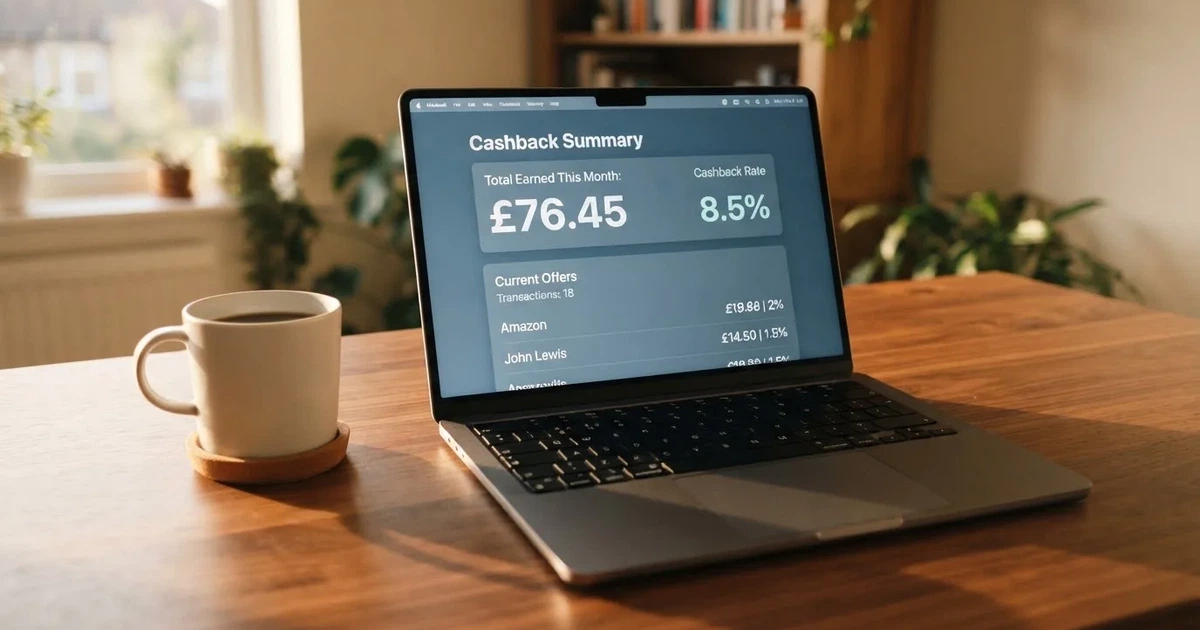
A cashback bonus looks like the most generous offer a UK online casino runs. A percentage of net losses, returned on a weekly or daily cycle, often paid as cash rather than bonus funds. Compared with a deposit match — where the headline percentage flatters a sum the player has to clear multiple times — a cashback offer asks for nothing up front and recoups a slice of what has already gone. The marketing tends to dwell on that contrast, and the marketing is not wrong to do so. What the marketing does not dwell on, and what this page is built around, is what the offer stops being worth once a real player sits down with it: a percentage that varies by game, a maximum that often goes unspoken, a wagering multiple that the Gambling Commission capped at 10x on 19 December 2025, and a definition of “net loss” that excludes the wins the player did take.
The UK’s licensed casino market is wider than the marketing makes it look. The Gambling Commission’s public register of gambling businesses held 139 active remote casino operating licences on 18 September 2026, and 1,065 active website domains trading against those licences, plus another 361 white-label sites running on someone else’s permission. The featured set on this page is ten of those domains, all drawn from that same register, and every one of them has to play by the same Commission rules. The ten are not a ranking of who pays the most cashback; the register does not carry cashback terms. They are a sample of the licensed market, sized to show what the offer looks like in practice across brands a player is likely to meet, and to give the comparison enough operators to be useful rather than a verdict.
Table of Contents
- What a casino cashback bonus actually is
- Payments and payout speed: how the refund reaches the player
- The bonus structure: what the offer really costs
- Landscape
- What the UK-licensed cashback market actually looks like
- The legal and regulatory frame
- Safer gambling around a cashback offer
- Crypto and anonymity: what changes and what does not
- Where the data stops
- Frequently asked questions
What a casino cashback bonus actually is
A cashback bonus is a refund on net losses over a defined window — most commonly a calendar week, occasionally a day or a month — paid back at a percentage the operator sets. The window and the percentage are the two numbers worth knowing, because everything else is built on them. A 10% weekly cashback on slots losses means that for every £100 of net slot loss between Monday 00:00 and Sunday 23:59, £10 returns to the account. A 20% daily figure on the same game returns £20 for every £100 of net loss in 24 hours. The two offers feel different because they are: a daily offer backstops a single bad session, a weekly offer averages out the good days with the bad.
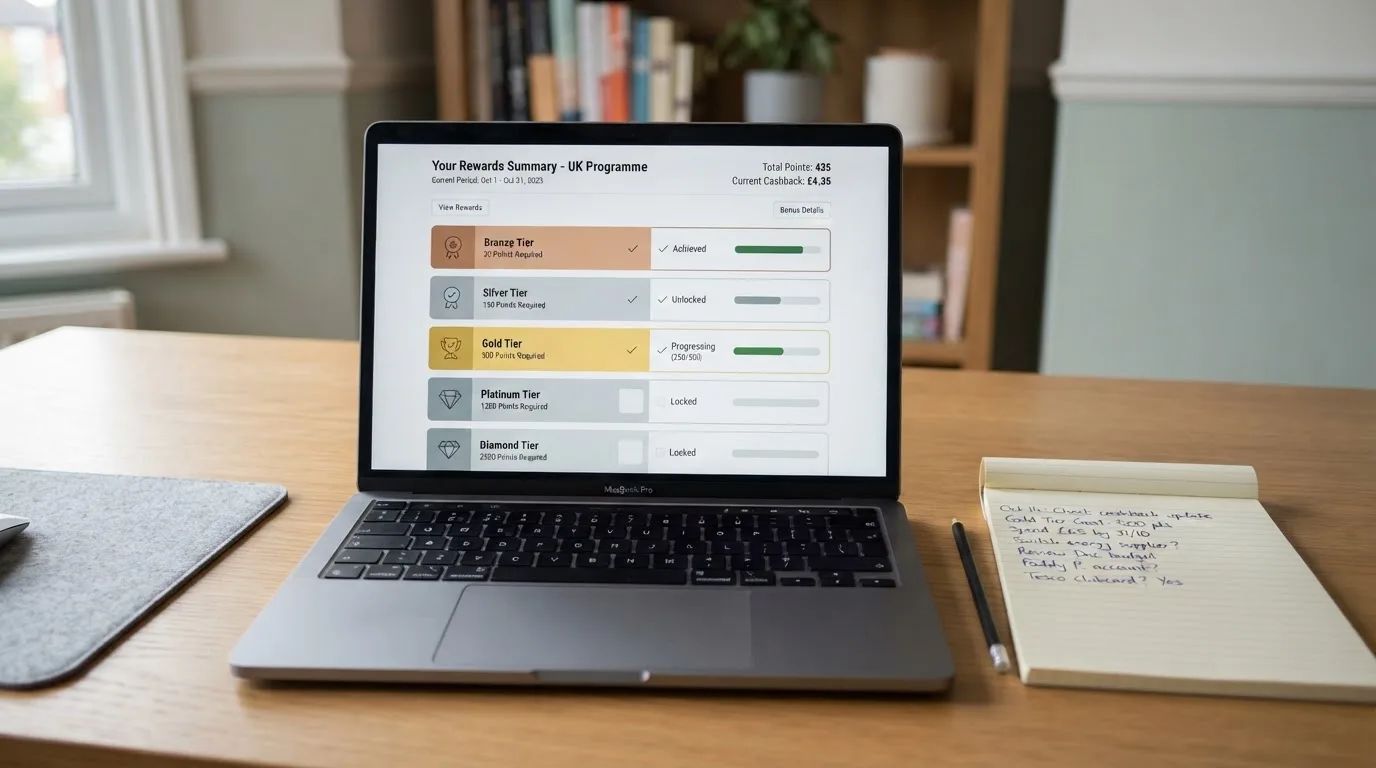
“Net” is the word that does the work. Most UK-licensed cashback offers calculate the figure as stake minus winnings on the eligible games, not as the total amount staked. A player who bets £200, wins £80 and loses £120 has £120 of net loss on the conventional reading, not £200. That distinction is the single biggest gap between how a cashback offer reads in the headline and what it returns in practice. A player who had a winning week receives nothing. A player whose losses were concentrated on excluded games receives less than the headline suggested, because table games, live dealer titles and jackpot slots are commonly carved out. A player who triggered a bonus during the window receives whatever the bonus terms allowed to count toward net loss, which is often not the full bonus stake.
The percentage itself is tiered more often than the headline lets on. A common shape is “10% on slots, 5% on everything else” — the higher number tied to the higher-margin games, the lower number carrying the casino’s smaller edge. A less common shape is a sliding scale that improves with the player’s VIP status, so a brand-new account sees 5% and a long-standing account sees 15%. Both shapes move the effective rate below the published one for most players.
What the offer is not: it is not a discount on future play, it is not a free bet, and at a UK-licensed site it is not anonymous. The Commission requires the operator to verify name, address and date of birth before the first deposit or any play, and a cashback credit still lands in an identified account. The player who wants to receive a refund on losses they did not have to identify themselves to incur will not find that combination at any operator on the featured set. The same rule applies to a crypto-funded account — the wallet that funded the deposit does not change what the operator needs to know about who is on the other end of it.
Payments and payout speed: how the refund reaches the player
The payment question on a cashback offer splits in two. The first is how the player funds the account that the refund eventually credits — the deposit side. The second is how the refund itself reaches the player when they want to withdraw it — the payout side. Both are subject to the same UK rules, and the rules have moved in the last few years.

On deposits, the Gambling Commission banned credit cards for gambling across all online and offline products in Great Britain from 14 April 2020 — including credit-card-funded e-wallet transactions, where a player tops up an e-wallet with a credit card and then spends the wallet balance on gambling. Debit cards and bank transfers are unaffected, and the ban does not extend to non-remote lotteries paid for face-to-face. The Commission estimated around 800,000 UK consumers used credit cards to gamble in 2018, and found 22% of online gamblers who used credit cards to gamble were classed as problem gamblers — the rationale for the policy, on the record. The practical effect is that the deposit methods available at a UK-licensed casino are debit cards, bank transfers, a handful of e-wallets that do not route through credit, and the prepaid or voucher methods that fall into the same category. Apple Pay, launched in the US on 20 October 2014 and in the UK from 14 July 2015, is widely supported at UK-licensed casinos because it draws on a debit card rather than a credit line, with tokenisation standing between the card number and the merchant. AstroPay, founded in 2009 and headquartered in Uruguay, operates in the UK through Larstal Limited, an electronic money institution authorised by the Financial Conduct Authority; its Brazilian, Danish and Isle of Man entities add to that coverage. Both are usable at the deposit stage without breaching the credit-card ban, because both run on debit-side funding.
On payouts, bank transfers inside the UK go through the Faster Payments Service, launched in 2008 and operated by the payments system Pay UK. Most payments arrive instantly or within a couple of minutes, with the scheme’s published limit of up to two hours for the slower cases. The scheme sets a £1,000,000 per-transaction ceiling, though individual banks routinely set their own lower caps. The Bank of England oversees the system’s safety and final settlement without being a direct participant. A cashback refund cleared into a UK bank account therefore lands as quickly as the operator’s internal approval allows — for most licensed brands that is same-day, sometimes within minutes of the cashback calculation running at the end of the week. E-wallet withdrawals are typically faster; debit-card withdrawals run through the card network and tend to take one to three working days, a delay set by the network rather than the operator.
What this means for a cashback offer specifically is that the refund is usually credited to the casino wallet, not pushed back to the original deposit method. The player who wants the cashback in their bank account has to make a separate withdrawal, and that withdrawal is subject to the operator’s standard payout timing. A player who plans to bank their cashback on the day it lands should expect to wait for the operator’s processing window rather than the rail’s.
The bonus structure: what the offer really costs
The headline percentage is the cheapest part of a cashback offer to read. The harder part is what sits on top of it, and three terms matter more than the rest: the maximum refund, the wagering multiple, and the game eligibility.
Maximum refund caps most weekly cashback offers at a fixed figure — £100 is common, £500 less so, an uncapped offer rare. The cap turns a 20% rate on a £5,000 losing week into £100, not £1,000, and it makes the effective rate on heavy losers considerably lower than the headline. The cap is rarely advertised in the headline banner; it sits in the small print, and it is the figure a player is most likely to want to know before they start.
Wagering requirements are the terms the Gambling Commission reshaped on 19 December 2025, capping them at 10x for any bonus at any UK-licensed casino. The cap covers the bonus amount — so a £100 cashback refund carries a £1,000 turnover requirement at the worst end, and zero where the operator elects to pay cashback as cash with no wagering. The cap is the single most important rule the Commission’s bonus reform has put on cashback offers, because it limits how much clearing the player must do before the refund becomes withdrawable. A pre-2025 offer at 35x or 40x took the refund and buried it under weeks of required play. A post-2025 offer at 10x takes the same refund and asks for a fraction of the play.
The cap does not say the offer has no wagering. It says the multiple is at most 10x. A cashback that returns as cash, withdrawable immediately, sits at 0x. A cashback that returns as bonus funds, playable on slots but not withdrawable until cleared, sits at the cap. Most UK-licensed offers sit somewhere in between, with the higher-rate promotions carrying the higher multiples.
Game eligibility is the third term. Slots are nearly always eligible at the full cashback rate. Live dealer and table games are commonly excluded, or counted at a reduced rate, because their house edge is lower than slots and the operator’s margin on them is correspondingly thinner. Jackpot slots are commonly excluded for the same reason — a player who hits a progressive on a cashback week would otherwise dilute the offer sharply. The terms page on any operator is where the eligibility list lives, and a player who plays a mix of games should read it before assuming the headline rate applies to all of them.
A worked example, given the 10x cap: take a £200 weekly cashback credit at 10x wagering, played at £1 per spin. The required turnover is £200 × 10 = £2,000. At £1 a spin that is 2,000 spins, and at the Commission’s minimum 2.5-second spin interval that is 5,000 seconds, or roughly 1 hour 23 minutes of continuous slot play. The same £200 credit at the same 10x cap played at £5 a spin — the maximum stake a player aged 25 and over may make on a single game cycle since 9 April 2025 — clears in 400 spins, or about 16 minutes 40 seconds at the minimum interval. The same £200 credit at 0x wagering, paid as cash, takes zero spins and zero seconds to clear. The headline rate does not move between these three offers. The amount of required play changes by a factor of more than five.
A wider band: a £50 credit at 10x played at £2 — the maximum for an 18-24 player since 21 May 2025 — is £500 of turnover, 250 spins, just over 10 minutes of continuous play. A £500 credit at 10x played at £5 is £5,000 of turnover, 1,000 spins, roughly 41 minutes 40 seconds. The figure that does not move is the multiple: it sits at 10x because the cap says it must, and what varies is the amount the player has to stake to clear it.
Landscape
The featured set on this page is the same ten operators the Gambling Commission’s register supplies the licence data for, and they cover the bulk of the well-known UK-licensed brands. The columns below hold only what the register and the public licensing record carry: who holds the licence, the licence number itself, the domain’s status on the register, and a column noting whether the subject — a casino cashback bonus — is one the operator’s own materials confirm. Several licences in this set are held by the same parent company, and the table makes that visible rather than hiding it under separate entries.
| Feature | Limit / Condition |
|---|---|
| Max Slot Stake (25+) | £5 |
| Max Slot Stake (18-24) | £2 |
| Wagering Cap | 10x |
| Credit Card Ban | Yes |
| GAMSTOP | Mandatory |
| Brand | Licence |
|---|---|
| Virgin Games | Gamesys Operations |
| Betfred | Petfre (Gibraltar) |
| Betfair | PPB Games |
| Sky Vegas | Bonne Terre |
| Gala Bingo | LC International |
| 32Red | Platinum Gaming |
| Casumo | Recro Limited |
| Midnite | Dribble Media |
| PokerStars | Stars Interactive |
| Jackpotjoy | Gamesys Operations |
The single fact to take from the table is what it does not say: the register carries no cashback terms. The column for subject support is empty across all ten because none of the operator-level research confirmed what each brand offers as a cashback bonus, what its rate is, what its maximum is, or what its wagering multiple is. The register records who is licensed to take UK customers, not what they promise those customers. A reader who wants the offer terms must read them on the operator’s own site, and any comparison between brands on the basis of cashback generosity has to start from there rather than from the licensing data.
A second fact to take from the table is that two of the ten brands — Virgin Games and Jackpotjoy — sit under the same Gamesys Operations Limited licence. They are different domains trading under the same permission, which means the underlying licence conditions, including GAMSTOP enrolment, are identical. A player who self-excludes through GAMSTOP is excluded from both, and a player with a complaint against one has the same Commission complaints route against the other. The same parent-company overlap applies to several other large UK-licensed groups, and treating them as independent operators is the kind of error that makes a comparison flatter than it should be.
The comparison also has to admit its limits. The register does not carry bonus terms, does not carry RTP by game, does not carry payout times, and does not carry any of the operational facts a player needs to choose between the brands on the basis of what they offer. The table is a licensing record, dressed in comparison columns because the comparison needs an anchor, and its real value is the licence number itself: a player who picks a brand off this page can take that number to the Commission’s register, see it there, and know the brand has been checked against the same test the page applied.
Virgin Games
Virgin Games trades as a white-label domain on the Gamesys Operations Limited licence — the register marks the domain “White Label” rather than “Active”. White-label means Virgin Games runs on someone else’s permission, in this case Gamesys, rather than holding its own. For a player the practical difference is small: the licence number on the register is the licence number the operator plays under, and the operator’s obligations under it are the same. What the white-label status does mean is that the operator behind the brand is a single layer rather than the licence holder itself, which makes the underlying company the one a complaint lands against. The brand carries no cashback terms the research confirmed, so the comparison has nothing to place on that column.
Betfred
Betfred runs on Petfre (Gibraltar) Limited’s licence, with Betfred listed as an active domain on the register. The Gibraltar-registered parent is the kind of structure common among established UK-facing bookmakers that took Gibraltar incorporation before the 2014 Act brought remote operators fully within the Commission’s perimeter. The licence number is what matters; the place of incorporation does not. No cashback terms were confirmed in the research, and the column carries the no-data marker for that reason.
Betfair
Betfair’s domain sits on the PPB Games Limited licence, with Betfair marked active. PPB is the Paddy Power Betfair group entity that holds the casino permission, distinct from the group’s sportsbook permission, and the split is typical of large groups running multiple products under separate licences. The same caveat on cashback terms applies — the register does not carry them, and the operator-level research did not surface confirmed terms.
Sky Vegas
Sky Vegas sits on Bonne Terre Gaming Limited’s licence, a relatively recent licence number suggesting the operator came into the Commission’s perimeter in the second wave of post-2014 licensing rather than the first. The shorter history does not weaken the licence, but it does mean the brand is newer to the Commission’s register than the longer-established names. No cashback terms confirmed.
Gala Bingo
Gala Bingo runs on LC International Limited’s licence, the same licence that sits behind several other well-known UK-facing brands in the same group. The shared parent is the kind of structural fact the comparison should keep visible. The product is a bingo-led casino with a long UK history predating the online product, and the licence number carries that lineage forward. No cashback terms confirmed.
32Red
32Red’s licence is held by Platinum Gaming Limited, with 32red active on the register. The brand has been on the UK-licensed market long enough that the licence number is in the older range, and the platform has built a reputation on a narrower product range than some of the larger multi-vertical brands. No cashback terms confirmed.
Casumo
Casumo sits on Recro Limited’s licence, with Casumo active. Casumo’s product design — a single wallet across casino and sports — is the kind of structure that has been the subject of Commission attention on mixed-product bonuses, which the 19 December 2025 rules now ban. A player on Casumo’s casino side should not expect a sportsbook-triggered casino offer, and the cap on wagering multiples will apply to whatever cashback the brand runs. No cashback terms confirmed.
Midnite
Midnite’s licence is held by Dribble Media Limited, with Midnite active on the register. The brand is one of the newer UK-licensed names on the featured set, with a licence number in the more recent range. A newer licence does not mean a weaker one — the Commission’s conditions apply equally — but it does mean the brand has a shorter track record on the register. No cashback terms confirmed.
PokerStars
PokerStars runs on Stars Interactive Limited’s licence under the UK domain rather than the older one, with the Commission register listing PokerStars as active. The .uk domain is the domain that takes UK customers under the Commission’s permission; the .com domain does not. A player who lands on the .com address is on a site that has not been licensed for UK customers in the same way, and that is a different proposition. No cashback terms confirmed.
Jackpotjoy
Jackpotjoy sits on the same Gamesys Operations Limited licence as Virgin Games, with Jackpotjoy listed active rather than white-label. The two brands share a licence and the obligations that come with it, but each runs as a separately operated site with its own terms and product mix. No cashback terms confirmed.
What the UK-licensed cashback market actually looks like
The licensed market for online casino cashback in the UK is not the whole online gambling market — it is the part that operates under the Commission’s permission. The two are not the same: a Curaçao or Malta-licensed operator can take UK customers at the marketing end and route deposits through payment methods the Commission does not regulate, but section 33 of the Gambling Act 2005 makes it an offence to provide gambling to people in Great Britain without a Commission licence. The Commission’s enforcement tools are cease-and-desist notices, search-engine delisting referrals, and payment and hosting referrals — but not ISP blocking, which the Commission has never had the power to use. The penalty for non-compliance falls on the operator, not the player; what the player loses is protection, not money. No GAMSTOP. No Commission complaints route. No approved ADR.
For a player, the difference between a UK-licensed and an offshore brand is the difference between a refund that arrives under Commission oversight and a refund that arrives at the operator’s discretion. Both can offer 10% weekly cashback. The licensed brand’s offer is constrained by the 10x wagering cap, the financial vulnerability check at £150 in rolling 30-day net deposits, the GAMSTOP condition, and the rest of the LCCP. The offshore brand’s offer is constrained by whatever the operator’s terms page says it is, and the terms page is the only check the player has.
The wider UK market context that sits behind every offer on the featured set is this: the Commission’s minimum age is 18, with name, address and date of birth verified before the first deposit or any play since 7 May 2019. Online slots carry a maximum stake per game cycle of £5 for players 25 and over since 9 April 2025, and £2 for 18-24 since 21 May 2025. Auto-play is banned, a slot spin may not be faster than 2.5 seconds, and losses disguised as wins are banned — all since 31 October 2021. Operators must prompt a customer to set a financial limit before the first deposit since 31 October 2025. None of these rules are optional. A UK-licensed cashback offer operates inside all of them, and a player comparing offers is comparing offers inside the same perimeter.
The legal and regulatory frame
The Gambling Commission is the regulator. Its sponsorship sits with the Department for Culture, Media and Sport, and the legal authority is the Gambling Act 2005, covering Great Britain — England, Scotland and Wales, not Northern Ireland. The Gambling (Licensing and Advertising) Act 2014 closed the previous arrangement under which an overseas-licensed operator could take UK customers on a remote licence from its home jurisdiction; from 2014 onwards, any operator taking customers in Great Britain needs a Commission licence wherever it is based. A Curaçao, Maltese or Gibraltar licence is not a substitute for a Commission licence for the UK market. A Gibraltar-registered parent — like Petfre (Gibraltar) Limited behind Betfred — is fine as a corporate structure, but the operating licence is the Commission’s, and the Commission’s conditions are what apply.
A remote casino licence number on the register has the form (account)-R-(number)-(suffix), with the leading six digits repeating the licence holder’s account number and the R marking the licence as remote. The Betfair licence 039411-R-319335-010, for instance, sits against PPB Games Limited’s account 39411. The format is the player’s quickest check that an operator is licensed at all — any operator willing to share the number with a player is most likely licensed, and any operator that will not share it is most likely not.
The Commission’s public register of gambling businesses is the test. It is searchable online and downloadable in full as CSV or Excel files. A player who wants to check a brand before depositing can search by the brand name or by the licence number, confirm the licence status as Active rather than Inactive or White Label, and read the trading name against the licence account. The register is the single most useful tool a UK player has, and it is the reason the table on this page sits where it does.
The legal and regulatory frame is what the cashback offer operates inside. The 10x wagering cap, the mixed-product bonus ban, the credit card ban, the GAMSTOP condition, the deposit limit prompt — each is a rule the offer has to honour, and each shapes what the offer looks like in practice. A cashback offer at a UK-licensed brand in 2026 is a different product from the same headline at a UK-licensed brand in 2024, and the rules are why.
Safer gambling around a cashback offer
The safer-gambling checks around a cashback offer are the same checks a player should make around any UK-licensed offer, with the cashback structure adding one specific concern: a refund on losses is, by construction, an offer that pays out when the player is losing. That is its appeal. It is also the feature that needs the most careful guardrails.
GAMSTOP enrolment is the first line of self-exclusion across every UK-licensed online operator. The condition has been mandatory for every online licence since 31 March 2020, with self-exclusion periods of six months, one year or five years, none of which can be cancelled early. A player who has self-excluded through GAMSTOP cannot receive a cashback refund at any of the brands on the featured set, because the operator cannot legally allow play and the cashback credit is a function of play. The national scheme is the right tool for a player who wants to stop.
Financial vulnerability checks run at £150 in rolling 30-day net deposits from 28 February 2025, using public data only, and the wider financial risk assessments have been announced but are not yet in force. The £150 threshold is the Commission’s figure, not the operator’s, and the check runs whether the player is on a cashback offer or not. A player whose deposits cross the threshold can expect the operator to make a check before further deposits clear.
Deposit limits are set by the player rather than the Commission, with the rule that the operator must prompt the customer to set a financial limit before the first deposit since 31 October 2025. The Commission does not set a default deposit ceiling; it sets the requirement that a limit be set at all. A player who wants a ceiling should pick one before the first deposit, and a player whose ceiling stops fitting their play should lower it.
Stake limits on slots are the Commission’s: £5 per game cycle for players 25 and over from 9 April 2025, £2 for 18-24 from 21 May 2025. The 10x wagering example earlier in this page uses these figures as the maximum stake a player can put through the cleared bonus at the cleared game’s spin. A player who clears a £200 cashback at 10x at the maximum stake clears it fastest, but a player who clears the same cashback at a lower stake takes longer to clear and risks more time on the slot — a trade-off worth knowing.
The National Gambling Helpline (GamCare) and GambleAware are the support routes for a player who finds the offer’s pull stronger than its value. The cashback offer is a marketing construct designed to keep a player playing, and a player who notices themselves playing to recover losses rather than to play is a player the offer has stopped serving. The helpline is free and confidential, and the offer’s terms page is not where the right help lives.
Crypto and anonymity: what changes and what does not
A crypto-funded casino account at a UK-licensed brand is an identified account. The Gambling Commission’s verification rules apply to the player, not the funding source, and a deposit in Bitcoin, Ether or any other cryptocurrency does not exempt the operator from the requirement to confirm name, address and date of birth before the first deposit or any play. The wallet that sent the deposit is not the wallet the operator checks against; the operator checks the person on the receiving end of the play.
What crypto changes at a UK-licensed site is the deposit rail. The deposit moves from a UK-regulated payment method to a crypto network transaction, with the operator’s conversion into sterling taking place before the funds are playable. The conversion rate is the operator’s, and the speed is the network’s — typically minutes for Bitcoin, seconds for some altcoins, with the operator’s own processing window on top. The credit card ban from 14 April 2020 does not capture crypto because crypto is not a credit card, but it does not exempt crypto-funded accounts from any other Commission rule. The 10x wagering cap applies. The GAMSTOP condition applies. The stake limits apply. The financial vulnerability check applies. The identity verification applies.
What crypto does not change at a UK-licensed site is the cashback offer. A player who funds with crypto and plays eligible games receives a cashback credit calculated the same way as a player who funds with a debit card. The refund is credited in sterling, withdrawable through the same payout methods the operator supports, and subject to the same wagering conditions the cashback terms specify. The crypto-funded player has not bought anonymity; the player has bought a different deposit rail and the same regulatory frame.
The offshore crypto casino that takes UK customers without a Commission licence is a different proposition. Its cashback terms are its own. Its wagering cap is its own. Its verification is its own. Its GAMSTOP enrolment is none. A player who prefers the offshore proposition knows what they are giving up; a player who thinks a crypto deposit buys the offshore anonymity and the UK-licensed protection has misunderstood both. The two are not stackable.
Where the data stops
The register is what the register is. It carries licence data, not offer data. A player who reads the table on this page and assumes it tells them which brand offers the most generous cashback has read past the column headers. The research behind this page confirmed the licence number, the licence holder, the domain status and the date of the register snapshot for every brand on the featured set. It did not confirm what any of them offer as a cashback bonus, because the register does not carry that information and the operator-level research did not surface confirmed terms.
What the data stops at, then, is the licence. A player who wants to choose between the ten brands on cashback terms has to read the terms on the operator’s own site, in the small print where the percentage, the window, the maximum, the wagering multiple and the eligible games all live. The page’s role is to set the frame the player reads those terms inside: the 10x cap, the credit card ban, the stake limits, the GAMSTOP condition, the verification requirement. The terms themselves are the operator’s, and they are where the comparison has to finish.
The register snapshot is also a snapshot. On 18 September 2026 it held 1,065 active and 361 white-label domain entries, and 139 active remote casino operating licences. Those numbers move. A brand on the featured set today could be inactive tomorrow; a licence could be revoked; a new domain could be added. The register is the live source, and a player who wants the current picture should read it directly rather than from a cached comparison.
Frequently asked questions
How is a casino cashback bonus usually calculated?
Most UK-licensed cashback offers calculate the refund as a percentage of net losses over a defined window — most often a calendar week, sometimes a day. “Net” means stake minus winnings on the eligible games, so a winning week returns nothing and a mixed week returns less than the headline suggests. The percentage and the window are the two numbers that matter; the rest sits on top.
Is weekly cashback paid automatically or does it need to be claimed?
It depends on the operator. Some brands run the calculation automatically at the end of the window and credit the refund without an opt-in; others require the player to claim the cashback through the promotions page before the window closes. The terms page on the specific operator is where this lives, and it is worth reading before assuming either way.
Can a cashback bonus be funded through a crypto-based casino account?
Yes, the deposit side can be. A UK-licensed operator can accept crypto deposits, and the cashback calculation runs on the play that follows regardless of the funding source. The credit card ban from 14 April 2020 does not capture crypto. What does not change is the identity verification — a crypto deposit does not exempt the operator from confirming name, address and date of birth before the first deposit or any play.
Does cashback come with its own wagering requirement?
Sometimes. The Gambling Commission’s 10x wagering cap from 19 December 2025 sets the ceiling on any bonus at a UK-licensed casino, including cashback, but the cap is a maximum, not a minimum. A cashback offer paid as cash with no wagering sits at 0x; a cashback offer paid as bonus funds sits somewhere up to 10x. The terms page on the operator is where the specific multiple lives.
What makes a cashback site trustworthy compared with one that is not?
A UK-licensed site carries a Gambling Commission licence, appears on the Commission’s public register of gambling businesses, and operates inside the Commission’s conditions — the 10x wagering cap, the GAMSTOP condition, the credit card ban, the verification requirement, the stake limits, the financial vulnerability check. A site without those features offers its own protection, which is no protection at all.
Is cashback offered as cash or as bonus funds with restrictions?
Both shapes exist. Cashback paid as cash carries no wagering and is withdrawable on receipt; cashback paid as bonus funds carries a wagering multiple up to the Commission’s 10x cap. The terms page on the operator is where the shape is stated, and the difference between the two is the difference between a refund that takes minutes to use and one that takes hours of cleared play.